
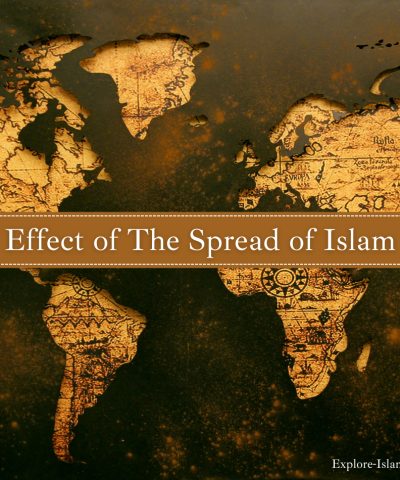
The spread of Islam shaped various aspects of life, including culture and economy. This article highlights its historical impact.
Continue reading
Abraham is a key figure in Islam, symbolizing unwavering faith in one God. His story is essential to understand the core of Islamic belief.
Continue reading
The wives of Prophet Muhammad (PBUH) are referred to in the Quran as “wives of the Prophet,” without naming them directly. They are addressed in chapters Al-Ahzab and At-Tahrim, where their roles, choices, and responsibilities are discussed. Learn more about Prophet’s wives in the Quran!
Continue reading
Islam and Judaism share many core beliefs, including the worship of one God, belief in prophets like Abraham and Moses, and the importance of moral conduct, charity, and religious law. Learn more about Islam and Judaism similarities!
Continue reading
Far from being opposing faiths, their teachings reveal common ground that is often overlooked. Learn more about similarities between Islam and Christianity.
Continue reading
Islam allows women to wear perfume at home, especially for their husbands. However, wearing perfume in public it is prohibited .
Continue reading
Abraham is a significant figure in both Islam and Christianity, though their views on his life and mission differ.
Continue reading
Islam sees beauty as a divine blessing, promoting a balanced approach to self-care and adornment that upholds modesty and dignity.
Continue reading
Islam rejects astrology and zodiac signs for predicting the future or character. It conflicts with core Islamic teachings.
Continue reading
In Islam, marriage is not just a societal norm but an act of worship (Ibadah). It is viewed as a form of devotion to Allah.
Continue reading
Muslims believe in the original scriptures but see the Quran as the final revelation. Islam continues the faith of earlier prophets.
Continue reading
Islam guides interactions between men and women with emphasis on modesty, respect, and boundaries, rather than complete isolation.
Continue reading