
Does Islam believe in the caste system? This is a common question in societies where social hierarchy and inherited status still shape communities. The simple answer is no, Islam does not recognise any caste system. In fact, Islam actively rejects the idea that people are born superior or inferior to others. Instead, it establishes equality, justice, and righteousness as the true measure of human worth.
In this article, we will understand the Islamic perspective on social equality through the Qur’an and the teachings of the Prophet Muhammad (peace be upon him). We will also address why caste-like practices still exist in some Muslim societies despite clear Islamic principles of rejecting this idea, followed by Islamic-based solutions to apply in your daily life.
Does Islam believe in the caste system?
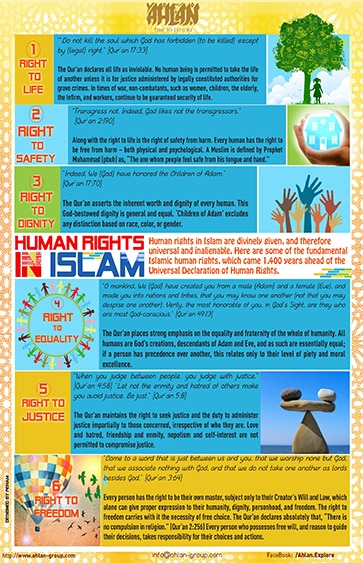
No caste system is allowed in Islam. Everyone is equal in God’s sight. Islam teaches that all mankind is equal. God created humanity from a single pair and does not judge individuals based on their race or colour. Instead, the only true measure of honour or superiority in the sight of God is At-Taqwa (piety, God-consciousness, and righteous actions).
Prophet Muhammad (peace be upon him) stresses human equality, rejecting the idea of the caste system. The Prophet Muhammad didn’t just talk about equality; he lived it. His closest companions came from diverse backgrounds, demonstrating that Islam truly transcends barriers. The Prophet (ﷺ) declares the Islamic criterion of considering people saying:
“Allah does not look at your figures, nor at your attire but He looks at your hearts and accomplishments.”
Read also:
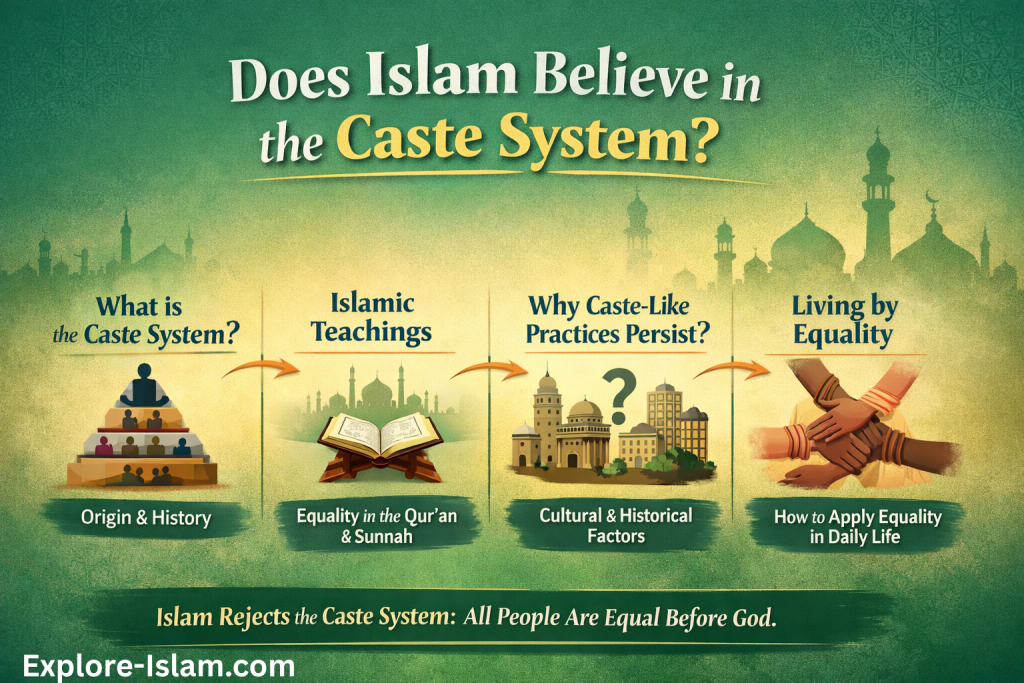
Core Islamic Principles on Equality Are Against the Caste System
Islam establishes clear principles that eliminate all forms of social hierarchy and discrimination. The following core beliefs show why Islam does not believe in the caste system and instead promotes complete human equality.
Tawhid (Oneness of God) Rejects Any Caste-Based Superiority
The concept of Tawhid (Oneness of God) teaches that there is only one Creator, and all humans are His creation. This makes all people equal before Allah and removes any claim of superiority based on birth, lineage, or social class—directly opposing the idea of a caste system.
Unity of Humankind’s origin in Islam Contradicts the Caste System
The Qur’an teaches that all humankind descends from Adam and Eve, emphasizing a shared origin and common humanity. This principle completely negates the idea of fixed social ranks or inherited status found in caste systems. Almighty God stresses the shared origin of humanity saying:
“O mankind! We have created you from a male and a female, and made you into nations and tribes, that you may know one another. Verily, the most honourable of you with Allah is that who has At-Taqwa (God-consciousness).”
[49:13]
Taqwa (Piety) as the Only Criterion of Superiority in Islam
Islam teaches that the only criterion for distinction among people is taqwa (piety) and righteous actions. The Prophet (ﷺ) said:
“there is no superiority of an Arab over a non-Arab, nor of a non-Arab over an Arab, nor of a white person over a black person, nor of a black person over a white person except through righteousness.”
This establishes that wealth, race, or lineage have no value in determining a person’s status, clearly rejecting caste-based hierarchy.
Thus, Islam categorically rejects the caste system and any form of discrimination. It promotes a universal standard of equality, where all people are valued based on their faith, character, and actions rather than their origin or social class.
Read: Does Islam believe in Abraham (PBUH)?
Why Do Caste-Like Traditions Persist in Muslim societies, despite the Islamic rejection of the caste system?
Although Islam does not recognise a caste system or any form of inherited hierarchy, some Muslim societies still practice caste-like divisions due to cultural, historical, and social influences not religious teachings.
Historical and Geographical Influences Behind Caste-Like Practices
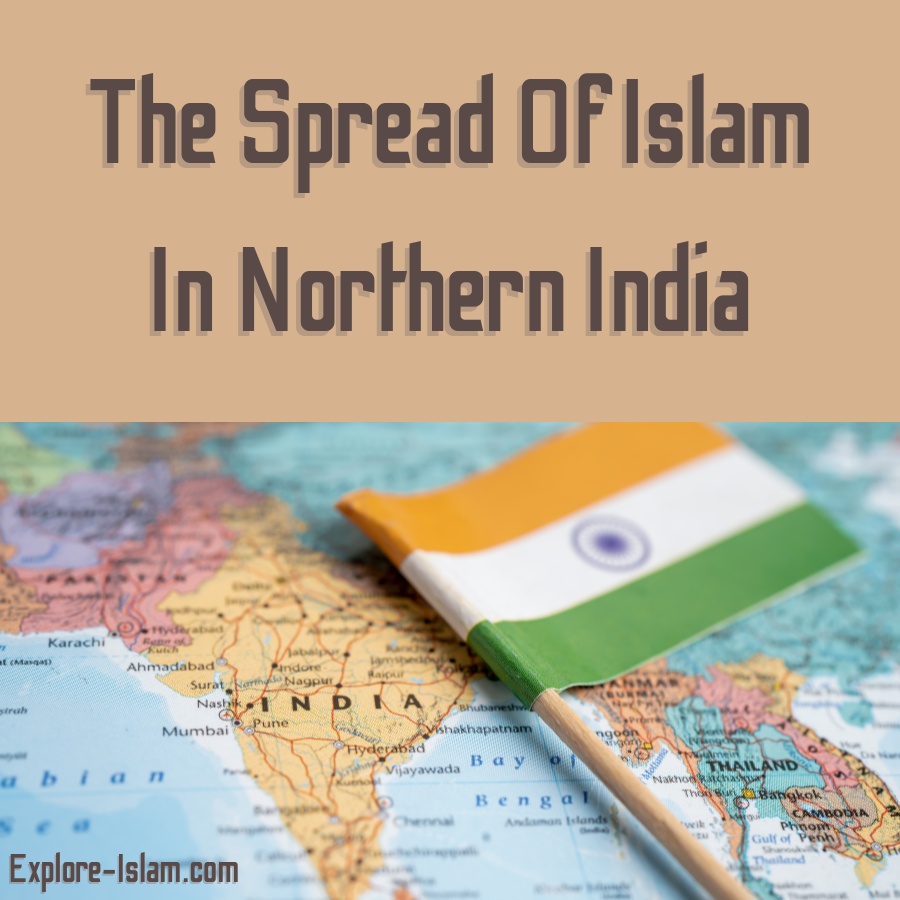
Caste-like traditions in some Muslim communities are largely inherited from pre-Islamic social structures, especially in the Indian subcontinent where caste systems existed for thousands of years. As Islam spread in these regions, some existing customs—such as jāti (birth-based identity)—remained part of the cultural fabric. This explains why caste-based distinctions can still be observed among some Muslim populations today, particularly in South Asia.
Colonial Policies Reinforced Caste-Like Divisions in Muslim Communities
During the colonial period, British administrative systems formalised and rigidly classified social groups. These policies strengthened caste identities and made them more visible in public and political life. As a result, divisions that were once fluid became more fixed, continuing to influence some Muslim societies even after colonial rule ended.
Social and Economic Factors That Sustain Caste-Like Systems
In contexts where equal access to education, healthcare, and economic opportunities is limited, people often rely on close social networks for support. These networks may be based on shared background, tribe, or perceived caste identity. This dependency reinforces group-based divisions, even though such practices contradict Islamic teachings on equality.
Read more about Social Justice in Islam
How to individually condemn the caste system and live by the Principle of Equality in Islam
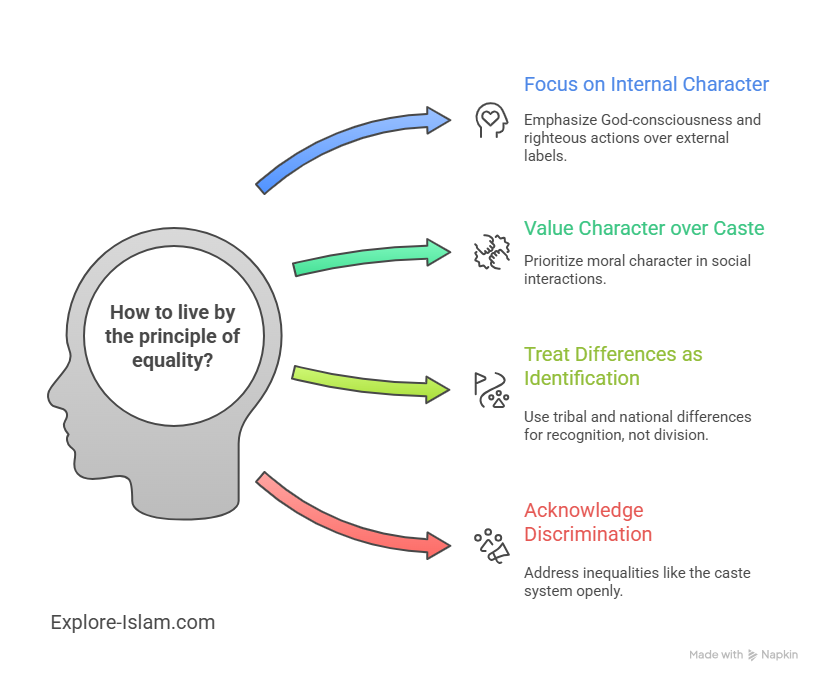
Living by the principle of equality in Islam means aligning your beliefs, attitudes, and actions with the idea that all people are equal before Allah. The following practical steps help you apply this principle in daily life.
Focus on Internal Character Over External Labels to Reject Caste Thinking
Recognise that the only true measure of honour in the sight of Allah is God-consciousness (taqwa) and righteous actions—not race, colour, nationality, or tribal background. This mindset removes the foundation of caste-based thinking.
Reconsider Caste in Social Interactions
In your dealings with others, prioritise moral character, honesty, and good conduct over social background or lineage. Treat tribal, ethnic, and national differences only as a means of identification—not as a basis for superiority or discrimination.
Acknowledge and Address Discrimination to Uphold Islamic Equality
Living by equality requires awareness and action. Acknowledge the existence of discrimination, including caste-like practices, and speak against them with fairness and wisdom. Ignoring injustice allows it to continue, while addressing it helps build a more just and equal society aligned with Islamic teachings.
Conclusion
To conclude, when someone asks, “Does Islam believe in the caste system?” the answer is simple and certain: No, it does not. And this matters deeply. In a world often divided by race, lineage, and social status, Islam offers a powerful blueprint rooted in unity, justice, dignity, and mutual respect.
- Everyone is equal in God’s sight. Islam teaches that all mankind is equal. God created humanity from a single pair and does not judge individuals based on their race or colour.
- God is telling us that He made us different, not so we could fight or feel superior, but so we could learn from each other.
- Islam is a faith without a central authoritative figurehead, such as a Pope or a professional clergy that acts as an intermediary. All Muslims are equally responsible for their own actions before God.
Seems like a new Islamic concept for you? Ask our team now for more information about the Islamic view on equality or any other Islamic beliefs right now!