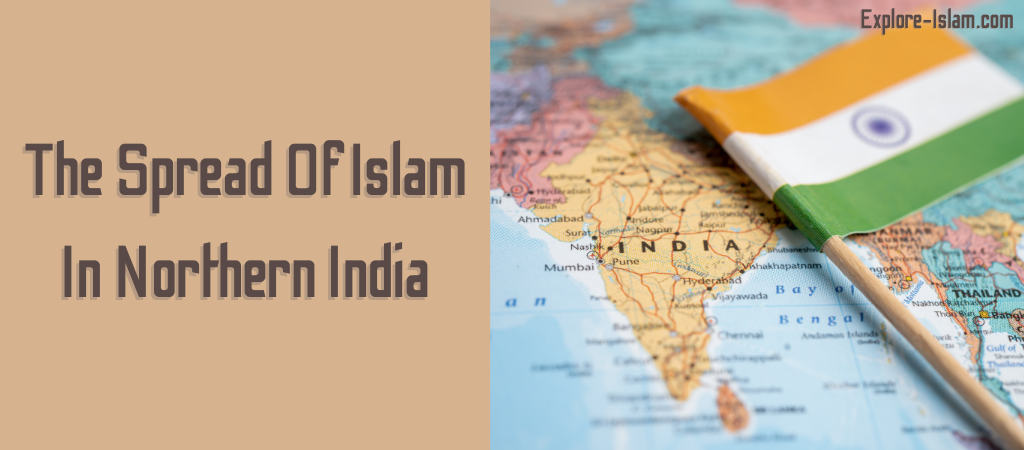
India has a great history and a great civilization, one of the oldest and most advanced civilizations. Since the Islamic religion is an international religion (for all nations), its teachings spread to all parts of the world, east and west. India was one of the countries in which Islam spread. Islam spread in India through two ways: the first was the Islamic conquests, which continued throughout the early Islamic eras.
The second way was the peaceful call that was carried out through trade and the role of Muslim preachers and rulers, as well as marriage between Indian society and societies that embraced Islam from Arabs and others.
India Before Islam
When we review the conditions of India before Islam, we find that moral, social and ideological decadence was the apparent feature, and this decadence appeared clearly from the beginning of the sixth century AD Among the manifestations of this decadence are the obscene abundance of deities and gods, rampant sexual desire, unfair class disparity, and unjust social privilege.
In India, before Islam, a group of religions existed, including Hinduism, the oldest of these religions in India, followed by Buddhism, which spread about five hundred years before Islam, and a small number of those who embraced Christianity and Judaism. In ancient times, India included: India, Pakistan, Bangladesh, Sri Lanka, and the Maldives.
We cannot pinpoint the exact date of the first contact between India and the Arabs, but it is historically proven that the Arabs had commercial relations with India before Islam; their ships reached most Indian cities; and they even went to the Bay of Bengal, the Malay countries, and the islands of Indonesia, until they formed Arab communities in some of these countries.
Read: The Effect of The Spread of Islam
Prophet Muhammad’s (PBUH) And The Spread Of Islam In Northern India:
Prophet Muhammad (PBUH) did not directly lead invasions into northern India, as his lifetime preceded major Islamic conquests in the subcontinent. However, his teachings and the early Islamic expansions under his successors played a pivotal role in the spread of Islam in the region. Following the Prophet’s death, Muslim armies began advancing into India, starting with the conquest of Sindh in 711 CE by Muhammad bin Qasim.
Over time, both military incursions and peaceful efforts by traders and missionaries contributed to Islam’s growth in northern India.
Read also: History Of Islam Religion: From The Prophet’s Revelation To Modern Times!
The Spread Of Islam In India
Islam’s journey into India started with several groups of Arab Muslim missionaries, led by figures such as Malik ibn Dinar and Sharaf ibn Malik. They arrived in the Malabar region, spreading Islam and building numerous mosques, especially in the city of Kodungallur.
These early Muslim traders and missionaries played a significant role in the spread of Islam through their honest dealings and peaceful interactions with the local communities. As a result, Muslims were able to establish their faith across various ports and cities, where they built mosques and practiced their religious duties freely, benefiting from the trust placed in them by local rulers due to their vital role in the flourishing trade between the Arabian Peninsula and India.
Read: The History Of Arab Before Islam
The Rashidun Caliphate’s Efforts For The Spread Of Islam In India
During the reign of the second caliph, Umar ibn al-Khattab (may Allah be pleased with him), the idea of spreading Islam to India began to take shape. Historians like al-Baladhuri mention that Umar appointed Uthman ibn Abi al-As al-Thaqafi as governor of Bahrain and Oman in 15 AH (636 CE). Uthman sent his brother, al-Hakam ibn Abi al-As, to Bahrain and Oman, launching preliminary expeditions towards India. However, these efforts were hindered by concerns over the potential perils of maritime expeditions, particularly given the uncertain conditions at sea during that time.
Under the rule of the third caliph, Uthman ibn Affan (may Allah be pleased with him), there were increased efforts to explore the region of India, with a series of exploratory missions. He appointed Abdullah ibn Amir to Iraq and instructed him to send a well-informed representative to the Indian frontier. A notable mission was sent to the region of Sindh in India, where the envoy, Hakeem ibn Jablah, described the area as having abundant water but difficult conditions. Despite his cautionary report, the Rashidun Caliphate did not launch a full-scale campaign in the region at that time.
During the caliphate of Ali ibn Abi Talib (may Allah be pleased with him), there was a brief but successful military intervention in the region. Al-Harith ibn Murrah led a campaign in the area and achieved a notable victory, capturing valuable booty and prisoners of war. This further highlighted the strategic importance of the region and the potential for spreading Islam through military and non-military means.
Read: What Is The Event That Halted The Spread Of Islam Into Western Europe?
The Umayyad Caliphate’s Involvement in the Spread Of Islam In India
The spread of Islam in India began to take a decisive shape during the Umayyad Caliphate, Muawiya ibn Abi Sufyan (may Allah be pleased with him), who renewed efforts to open the Indian subcontinent to Islam. In 44 AH (665 CE), Muawiya sent al-Muhallab ibn Abi Sufra with an army to invade the Sindh region, marking the beginning of formal military expeditions into India. The initial expeditions were met with fierce resistance, but the Umayyad forces managed to secure some territories.
This momentum grew after a major incident involving a ship carrying Muslim women from Sri Lanka that was seized by pirates near the port of Debal, prompting Al-Hajjaj ibn Yusuf to intervene. After initial failed expeditions, he appointed the young commander Muhammad ibn Qasim, who led a well-prepared campaign into Sind around 711 CE.
Within a few years, he defeated the local ruler King Dahir and established the first lasting Muslim rule in Sind and Punjab. This marked the true beginning of Islam’s firm presence in the Indian subcontinent, where mosques and Islamic institutions were established, and the faith began to take root among local populations.
Read also: What Effect Did The Spread Of Islam Have On The Slave Trade?
Islamic Expansion Under The Abbasids In India
With the rise of the Abbasid Caliphate, efforts to expand Islam into India continued but with varying degrees of success. The early Abbasid caliphs, including Al-Saffah and Al-Mansur, were particularly enthusiastic about maintaining and strengthening Islamic influence in the region. During Al-Saffah’s reign (132-136 AH), the caliph sent Musa ibn Khabir to Sindh, where he was able to briefly take control, but soon faced a revolt from local forces.
The most notable Abbasid military effort came under the caliphate of Al-Mansur (136-158 AH), who sent numerous expeditions to the Indian subcontinent. One of the most successful campaigns was led by Amr ibn Muhammad ibn Qasim, who completed the consolidation of Islamic rule in Sindh and expanded further into regions like Kashmir and Multan.
In the period that followed, the Abbasid caliphs, including Al-Hadi (158-169 AH) and Harun al-Rashid (170-193 AH), continued to support military expeditions into India. Harun al-Rashid sent a number of military campaigns to further stabilize the region, such as the expedition led by Ishaq ibn Sulayman al-Hashimi, which ended in failure. However, his successor, Caliph Al-Ma’mun (198–218 AH), continued to see India as an area of strategic importance for the Abbasid Caliphate, with several governors appointed to ensure its inclusion within the wider Muslim empire.
Read also: What Effect Did Abu Bakr Have On The Spread Of Islam?
Role Of Mahmoud Of Ghazni In The Spread Of Islam In India
The Muslim ruler Abu al-Qasim Mahmoud ibn Sabuktigin usually known as Mahmud of Ghazni led 71 military campaigns into India, all of which ended in victory. Nearly every year witnessed one of his expeditions, through which he brought regions such as Punjab, Multan, and large parts of northern India under Muslim rule. His efforts played a significant role in the spread of Islam in India, not only through conquest but also by establishing stability and governance. Widely regarded as one of the greatest Muslim rulers to enter the Indian subcontinent, he transformed the region from fragmented states and scattered emirates into a more unified political entity during his reign (998–1030 CE / 388–421 AH).
The Role Of Trade And Cultural Exchange
While military campaigns were instrumental in spreading Islam in India, trade played a crucial role. Muslim merchants and traders had established significant influence along the western coasts of India, particularly in Gujarat and Malabar. The steady flow of Muslim traders facilitated cultural exchanges, enabling the spread of Islam in a non-coercive manner. These traders were not only responsible for bringing goods but also for introducing Islamic culture, practices, and values to the Indian subcontinent. Many local rulers found it beneficial to establish relationships with Muslim merchants and, over time, some embraced Islam, incorporating it into their courts and administrations.
Testimony Of A Hindu-Muslim Scholar On The Muslim Opening For India
In his discussion of the civilizational impact of Islam in India, Abul Hasan Ali Nadwi emphasizes that Muslim presence was constructive rather than exploitative. He highlights that their mission was rooted in faith and long-term development rather than temporary gain.
“The Muslims did not behave in India like a foreign element or a passing visitor. They did not treat the country as a milch cow to be exploited and abandoned. They came to stay and to build. They brought with them their faith, their ideals, their culture and their administrative ability and gave to the land the best they possessed.” (Muslims in India, trans. Mohammad Asif Kidwai, pp. 15–18).
Read also: The Spread of Islam With Timeline and Map!
Conclusion
To conclude, the spread of Islam in India was a gradual process, shaped by a combination of military campaigns, trade, and cultural exchange. Also, through military efforts under the Rashidun, Umayyad, and Abbasid caliphates, Islam’s presence in India grew steadily. The victories of Muhammad ibn Qasim and the ongoing work of Muslim traders ensured that Islam’s influence expanded across the subcontinent, where it would eventually become one of the most prominent religions in the region.
Although the early conquests did not result in the immediate widespread conversion of the entire subcontinent, they laid the groundwork for the eventual establishment of Islamic empires, cultures, and communities throughout India. The long-lasting influence of Islam in India is a testament to the resilience and adaptability of the faith in diverse cultural and political landscapes.
Curious to know more about the history of Islam and how it spreads throughout the world? Subscribe to the Explore Islam newsletter and start a deeper WhatsApp conversation with our supportive team right now!