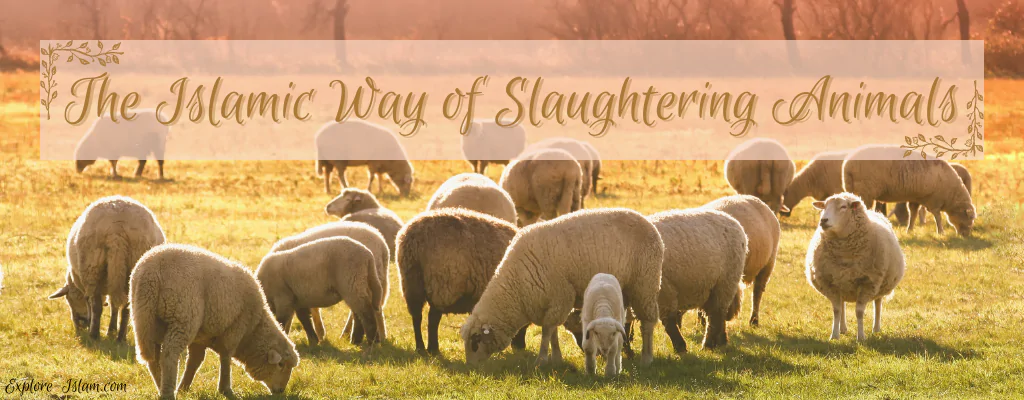
The Islamic Way of Slaughtering Animals is a unique and comprehensive system that combines faith, ethics, and mercy in dealing with animals. In Islam, slaughtering is not merely a physical process for food production, but an act of worship that must be carried out with kindness, respect, and remembrance of Allah. It ensures that animals are treated humanely before and during slaughter, while also emphasizing cleanliness, proper method, and spiritual awareness.
This article explains the key principles and rulings that define the Islamic approach to slaughtering animals in a clear and practical way, highlighting the difference between the Islamic slaughter and the regular one.
Islamic Way of Slaughtering Animals: Halal Slaughter Process
Islam teaches that even during slaughter, mercy, dignity, and care must be upheld. The halal process is not only about what is permissible to eat, but also about the ethical treatment of animals and fulfilling the principle of excellence (ihsan) in all actions.
1. Preventing Emotional Harm to the Animal
An animal must not be exposed to distress before slaughter. It should not see or smell blood from other animals, nor hear sounds that may frighten it. Islam emphasizes avoiding unnecessary fear and psychological stress.
2. Gentle Handling and No Frightening
The animal should be brought to the place of slaughter calmly, without force or intimidation. Rough treatment is prohibited.
The Prophet offered as sacrifices, two horned rams, black and white in color. He slaughtered them with his own hands and mentioned Allah’s Name over them and said Takbir and put his foot on their sides.”
This demonstrates the Prophet Muhammad’s (peace and blessings be upon him) calm and respectful handling of animals before slaughter.
3. Skilled and Compassionate Slaughter (Ihsan)
The slaughter should be performed by someone knowledgeable to ensure minimal suffering and a swift process. The animal must not be in distress, and the act should be done efficiently and mercifully.
Messenger of Allah (peace be upon him) said:
Verily Allah has prescribed ihsan (perfection) in all things. Thus if you kill, kill well; and if you slaughter, slaughter well. Let each one of you sharpen his blade and let him spare suffering to the animal he slaughters.”[Sahih Muslim]
4. Proper Method for Animals’ Blood Flow in the Slaughtering Process
The throat should be cut in a way that ensures the blood flows out quickly and completely. The tool must be sharp and appropriate.
The Prophet said:
Eat what is slaughtered (with any instrument) that makes blood flow out, except what is slaughtered with a tooth or a nail.’[Sahih Al Bukhari]
5. Kindness and Protection of the Animal
Islam strictly prohibits cruelty toward animals, both before and during slaughter.
The Prophet also discouraged striking animals on the face. Jabir reported:
“The Prophet forbade beating (animals) on the face.”(Sahih Muslim)
The halal slaughter process reflects a complete ethical system in Islam—combining lawful consumption with compassion, respect for life, and the principle of ihsan.
Read more:What is Qurbani?
What to say before slaughtering an animal in Islam: Halal slaughter prayer
The only required duaa to say before slaughtering the animal is:
Bismi Allah, Allahu Akbar
“In the name of Allah, Allah is Greater.”
This is said to remember Allah while taking from His provision, making the act lawful (halal) and an expression of gratitude to Him.
It is also permissible to say additional supplications, such as:
“O Allah, this is from You and to You, this is for me and my household.”
If slaughtering on behalf of someone else, one may say:
“This is for so-and-so.”
Read:
Is Islamic Slaughtering Cruel to Animals?
No, Islamic slaughter is not cruel; rather, it is a method that emphasizes mercy, responsibility, and respect for life while acknowledging the Creator of all beings.
Sacrificing an animal for the sake of God is not cruelty but an act of obedience and devotion, carried out within strict ethical guidelines. The principle of Qurban in Islam is deeply rooted in mercy, wisdom, and gratitude for Allah’s blessings.
Read also:Is the kaaba an idol?
Do animals feel pain when slaughtered the halal way?
No. Halal slaughter is designed to minimize suffering and ensure the most humane treatment of animals possible in Islamic practice.
The process requires calming the animal before slaughter, avoiding frightening situations, and keeping animals away from stress or distress caused by other animals. The cut is performed swiftly and properly, which allows rapid blood flow and a quick loss of consciousness.
Because of this, any sensation of pain is extremely brief and minimized as much as possible, aligning with the Islamic principle of mercy and excellence (ihsan) in all actions.
Punishment for Animal Cruelty in Islam
Islam strictly forbids any form of cruelty or unnecessary harm to animals. This includes mutilation, abuse, or causing suffering without justification. Such actions are considered violations of mercy and the ethical principles of Islam.
The Prophet Muhammad (peace be upon him) strongly condemned this behavior. Ibn ‘Umar narrated:
“The Prophet cursed the one who did Muthla to an animal (i.e., cut its limbs or some other part of its body while it is still alive).”
(Sahih al-Bukhari)
This shows that harming animals without right is a major wrongdoing in Islam. The emphasis is on mercy (rahmah) and kindness toward all living beings, and any deliberate cruelty is considered sinful and subject to accountability before Allah.
Read also:What is Hajj
How to Slaughter a Goat in Islam
In Islam, slaughtering a goat must be done in a humane and lawful way, following the teachings of Prophet Muhammad (peace be upon him), who did the following with a ram:
He said to ‘A’isha (his wife): Give me the large knife, and then said: Sharpen it on a stone. She did that. He then took it (the knife) and then the ram; he placed it on the ground and then sacrificed it, saying: Bismillah, Allah-humma Taqabbal min Muhammadin wa Al-i-Muhammadin, wa min Ummati Muhammadin (In the name of Allah,” O Allah, accept [this sacrifice] on behalf of Muhammad and the family of Muhammad and the Umma of Muhammad.”
[Sahih Muslim]
Read also:
Halal slaughter vs regular Slaughter
A key distinction is that halal slaughter includes the remembrance of Allah by mentioning His name before the act. This acknowledges the Creator and turns the process into an act of worship. In contrast, modern industrial slaughter often focuses purely on efficiency, with no acknowledgment of God.
| Aspect | Halal Slaughter | Regular Industrial Slaughter |
| Animal Treatment | Emphasizes kindness, calm handling, and minimizing stress | May prioritize speed and efficiency over emotional comfort |
| Pain Reduction | Quick, controlled process designed to reduce suffering | Varies by system; sometimes less focus on minimizing distress |
| Blood Drainage | Ensures proper drainage of blood from the body. Therefore, meat is clean and good for human consumption. | May not prioritize complete drainage in all systems |
| Spiritual Aspect | Allah’s name is mentioned before slaughter, linking the act to worship | No spiritual or religious remembrance in most systems |
| Ethical Framework | Based on mercy, responsibility, and awareness of the Creator | Primarily industrial and commercial focus |
| Intention | Gratitude to Allah and lawful consumption | Production and consumption-focused process |
Thus, Halal slaughter combines humane treatment, cleanliness, and remembrance of Allah, making it a spiritually and ethically grounded practice.
Glorifying Allah is the best act anyone can do, especially when they enjoy Allah’s blessings. Also, thanking Allah for them is one of the best ways to glorify the All-Mighty. This part alone, compared to how God is totally forgotten in the regular modern slaughtering process, is enough to make the halal way superior.
Conclusion
To conclude, the Islamic Way of Slaughtering Animals reflects a complete moral and spiritual framework that balances human need with compassion and responsibility. It is based on mercy toward animals, minimizing their suffering, and remembering Allah during the act. By following these guidelines, Muslims turn slaughtering into an ethical practice rooted in ihsan (excellence) and gratitude to the Creator. Ultimately, it shows that Islam promotes not only lawful consumption, but also dignity, kindness, and accountability in all aspects of life.
Curious to know more about how Islam asks its believers to treat animals? Read the following article for more about Islam’s mercy and kindness to animals, and share your concerns with our team for a deeper discussion!