The rules of war in Islam stand clear from the past to today. Rules of war in Islamare revealed in history and alive in the actions of true Muslims in both peace and conflict.
Is war ever guided by principles? Throughout this article, we aim to highlight the rules of war in islam, the purpose of war in Islam and the ethical guidelines in Islamic warfare. In addition, we aim to answer the following questions: Who can fight and When, can civilians be harmed in Islamic wars, what does the Quran say about Jihad and fighting?
The Purpose of War in Islam
Is war driven by greed—or guided by purpose? War in islam originally prevents injustice and oppression, saves lives, and preserves human rights. Wars in Islam are not based on imperialism or stealing others’ treasures and resources. In Isla, wars are not commercial; fought to collect gold, diamonds, or petrol, as many so-called “developed countries” do.
What Does the Quran Say About Jihad and Fighting?
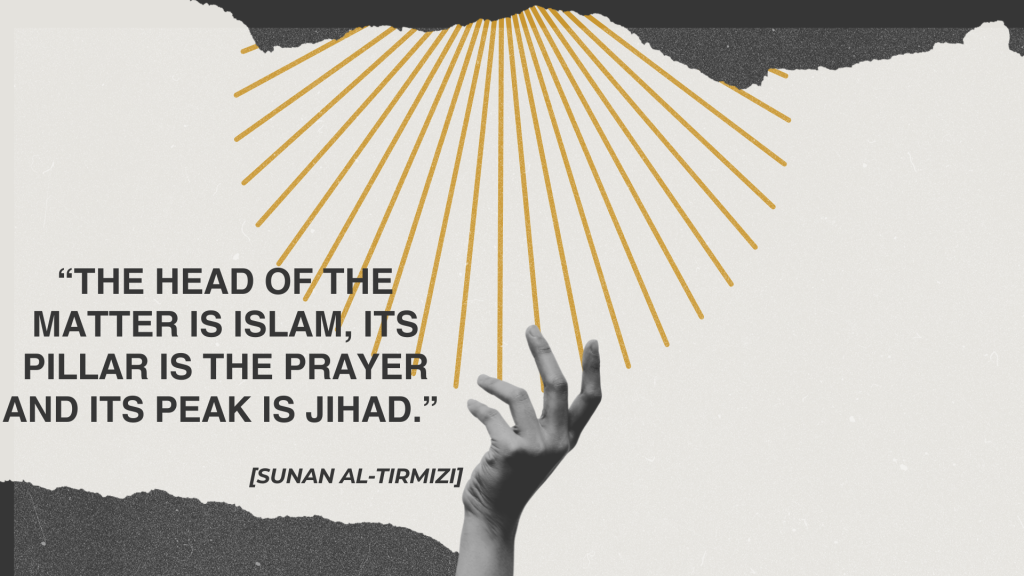
Legally, Jihad means exerting effort in fighting the disbelievers, and it is also called striving against the self, Satan, and the wicked. As for striving against the self, it is about learning the matters of religion, then acting upon them, then teaching them. As for striving against Satan, it is about repelling what he brings of doubts and what he makes appealing of desires. As for striving against the disbelievers, it is done with the hand, money, tongue, and heart. As for striving against the wicked, it is done with the hand, then the tongue, then the heart.
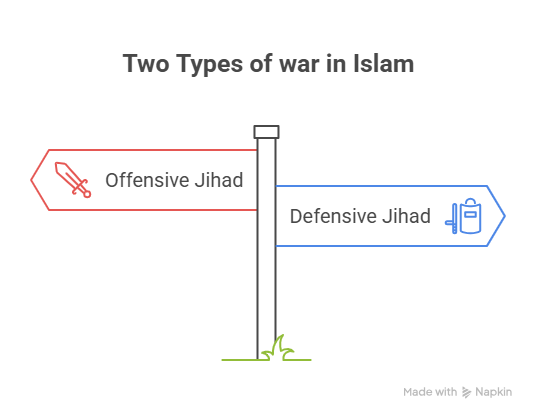
We can divide the types of war in Islam, in the light of its purposes, into Offensive Jihad and Defensive Jihad.
Two Types of war in Islam
Jihad, in its broad meaning, refers to any rightful effort to uphold the word of God, share the message of Islam using all available means, and promote justice, security, and mercy in society.
1- Offensive Jihad (Jihadutalab)
Offensive Jihad aims to safeguard the freedom to spread Islam, remove obstacles in its way, and defend the oppressed—within specific rules and conditions set by Islamic scholars to ensure benefit and prevent harm.
“Fight against them ˹if they persecute you˺ until there is no more persecution…”
The ultimate objective of offensive Jihad is the communication of the message of Islam without compulsion.
“Let there be no compulsion in religion”
2- Defensive Jihad (Jihaduldaf’)
Defensive Jihad refers to the form of Jihad established as a duty of defense when there is an attack on religion, the Muslim community, the homeland, society, or an individual. Therefore, Jihad was allowed to repel aggression and corruption, not to remove disbelief.
Fight in the cause of Allah ˹only˺ against those who wage war against you, but do not exceed the limits. Allah does not like transgressors.
Read More:
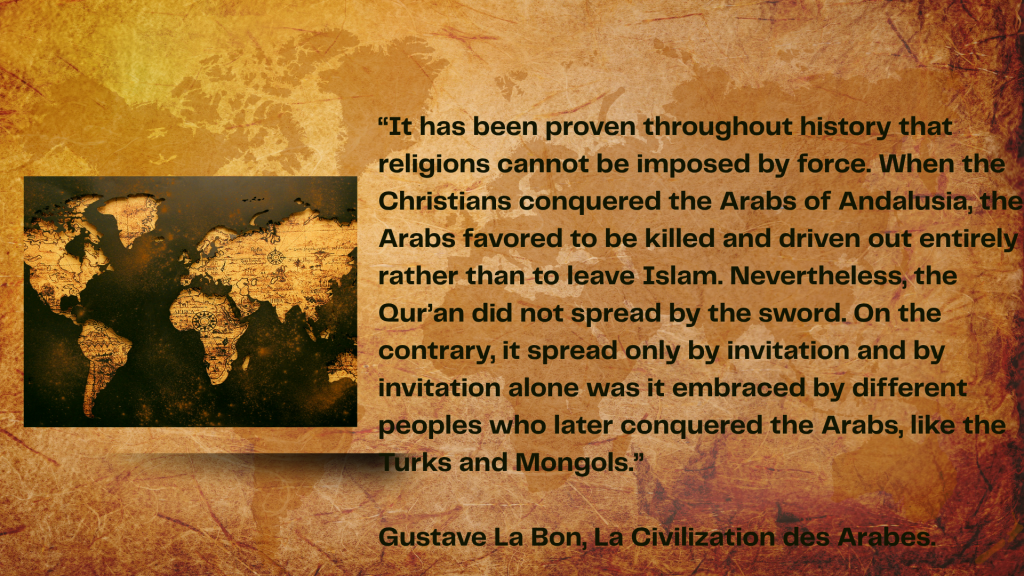
- Was Islam Spread by Sword?
- Is Islam A Violent Religion?
- How Did Prophet Muhammad Start Spreading His Message About Islam?
Ethical Guidelines in Islamic Warfare
Ethical Guidelines in Islamic Warfare demonstrate that Islamic warfare is not based on uncontrolled violence, but rather on a regulated moral system grounded in nobility and civility in warfare, justice in warfare, humane treatment of captives, prohibition of breaching treaties, and environmental preservation, all of which ensure that conflict remains bound by strict ethical and humanitarian principles.
1. Nobleness and Civility in Islamic Warfare
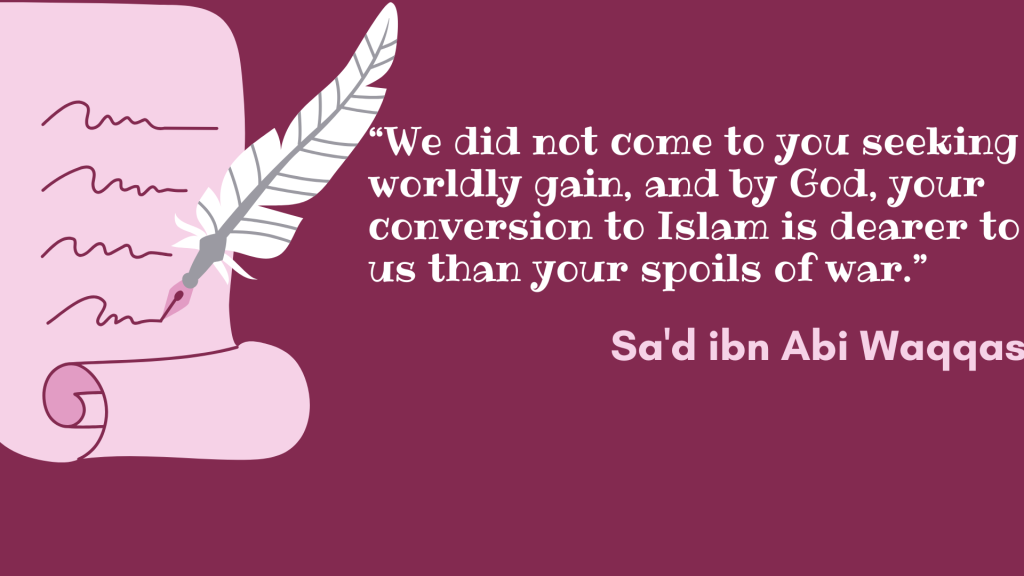
War in Islam is conducted for a noble motive. Rabi’ ibn ‘Amir, the Muslim envoy of Sa’d ibn Abi Waqqas to the Persians, said to Rustam, the Persian commander:
2. Justice in Islamic Warfare
﴿وَلَا تَعْثَوْا فِي الْأَرْضِ مُفْسِدِينَ﴾
“…nor go about spreading corruption in the land.”
Whenever the Prophet sent an army, he would instruct its leader to fear God and act justly.
“Fight in the name of Allah, fight those (who fight you) from among the disbelievers and do not exceed your limits, do not transgress, deceive, mutilate [the dead] and do not kill a child.”
[Al-Tirmidhi].
3. Dealing with Captives in Islamic Warfare
A prisoner of war could be released, ransomed, exchanged for Muslim prisoners, or kept in captivity based on the leader’s decision. In some cases, a literate prisoner could even gain freedom by teaching ten Muslims how to read and write. During that time Muslims should treating them humanely and preserve their lives.
4. Prohibition of Breach of Treaties in Islamic Warfare
The Prohibition of breach of treaties in Islamic Warfare derived from the Sunnah is shown in the message of U‘mar Ibn A‘bd Al-A‘ziz, the eighth Umayyad caliph, wrote to one of his governors,
“It has been passed down to us that when the Messenger of God (ﷺ) sent out a raiding party (an army or expedition), he would say to them, ‘Make your raids in the Name of Allah in the Cause of Allah. Fight whoever denies Allah. Do not steal from the booty, and do not act treacherously. Do not mutilate and do not kill children.’Say the same to your armies and raiding parties, God willing. Peace be upon you.”
[Al-Muwatta’]
5. Preserving the environment
This includes the prohibition on killing animals or cutting trees or destroying harvest or polluting rivers or wells or demolishing houses. God Almighty describes in the Noble Quran the destruction caused by Jewish during wars,
“…And He cast horror into their hearts so they destroyed their houses with their own hands…”
Who Can Fight and When?
All people has a right to defend themselves, souls, properties, lands, dignity and religion.
The Muslim leader only chose military action after exhausting all peaceful methods. Muslims should fight for the sake of God when the Muslim leader call for Jihad. Thus, True preparation is a must. To be able to defend yourself is about becoming a strong, balanced, and responsible person who can handle challenges wisely; physically, mentally, and practically, following Islamic ethics. If you watch the news since 2024, you will find a good example of a Muslim warrior in the Middle East when following the news of Gaza.
“Prepare against them what you ˹believers˺ can of ˹military˺ power and cavalry to deter Allah’s enemies and your enemies as well as other enemies unknown to you but known to Allah…”
Can Civilians Be Harmed in Islamic Wars?
Fighting should be only against warriors not defenseless civilians who are not in the battlefield and are not equipped or trained to be engaged in combat.
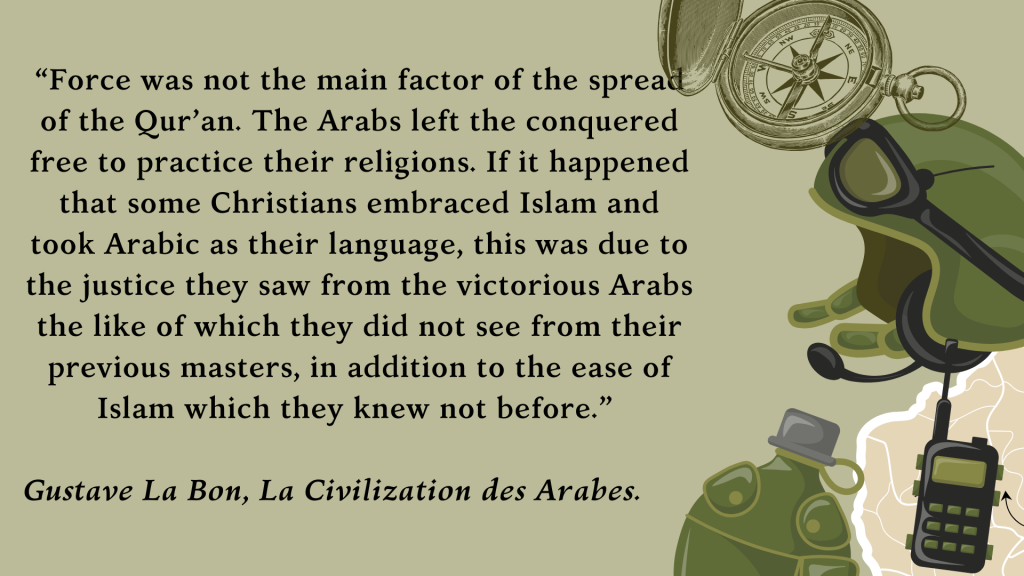
The patience and tolerance shown by the Arab conquerors, often overlooked by historians, help explain how they were able to expand their conquests.
Conclusion
Is it surprising for you that you can see the reflection of the beauty of Islam through its rules in war? Islamic rules of war show that even in conflict, there are clear limits based on justice, mercy, and responsibility. War in Islam is not for greed or power, but to stop injustice, protect people, and defend against harm.
The article discusses the two types of jihad: offensive (to allow the message to be shared) and defensive (to protect from attack).
Warfare follows strict ethical rules, including: Good conduct and self-control, Justice and no wrongdoing, Kind treatment of captives, Keeping promises and treaties, and Protecting nature. Moreover, civilians must not be harmed. War is a last option, after peaceful solutions fail. Also, preparation means being strong, balanced, and ethical.
If you have unanswered questions about this topic or any other topic about Islam, do not hesitate to be part of our journey and start a WhatsApp conversation right now!