| Key Takeaways |
| Christianity began in first-century Roman Judea, while Islam emerged roughly six centuries later in seventh-century Arabia. |
| Early Muslims fleeing persecution in Mecca found protection from a Christian king in Abyssinia around 615 CE. |
| Seventh-century Islamic expansion brought millions of Christians in former Byzantine territory under Muslim governance within a few decades. |
| The Crusades and the Islamic Golden Age represent opposite poles of the same long relationship — one shaped by warfare, the other by scholarly exchange. |
Long before the Crusades or colonial-era missions, Muslims and Christians were already talking to each other. Within Prophet Muhammad’s own lifetime, a delegation of Christian leaders traveled from Najran to Medina, prayed inside his mosque, and negotiated a treaty with him directly.
That meeting, in the early 7th century, set a pattern that would repeat for the next fourteen hundred years: encounter, negotiation, exchange, and at times, conflict.
1. Christianity Began in First-Century Judea While Islam Emerged Six Centuries Later in Arabia
Christianity traces its origins to the ministry of Jesus in Roman-occupied Judea in the first century CE, spreading through the Mediterranean world before becoming the official religion of the Roman Empire under Emperor Theodosius I in 380 CE. Its early history involved persecution, apostolic missionary journeys, and eventual imperial adoption.
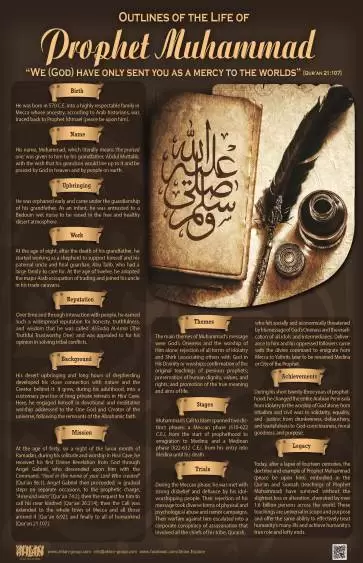
Islam began over five centuries later, in 610 CE, when the Prophet Muhammad (PBUH) received the first revelation in the cave of Hira near Mecca. A well-known hadith preserved by the companion Salman al-Farisi captures this gap directly.
Sahih al-Bukhari (narrated by Salman): “The interval between Jesus and Muhammad was six hundred years.”
Readers interested in how these two traditions grew from their earliest days can compare the similarities and differences in the spread of Islam and Christianity for a fuller picture of how each religion took root and expanded.
2. Early Muslims Found Refuge With a Christian King During the Migration to Abyssinia
Around 615 CE, a group of persecuted Muslims fled Mecca and sought asylum in Christian Abyssinia, in what became one of the earliest recorded encounters between the two communities. The Prophet Muhammad (PBUH) directed them there specifically because its ruler, the Negus, was known for justice.
When Quraysh envoys demanded the refugees be handed over, the Negus summoned the migrants. Ja’far ibn Abi Talib, cousin of the Prophet (PBUH), recited verses from Surah Maryam describing the birth of Jesus with deep reverence.
Classical accounts describe the Negus and his bishops weeping as they listened, after which he refused to surrender the Muslims and returned the Quraysh gifts.
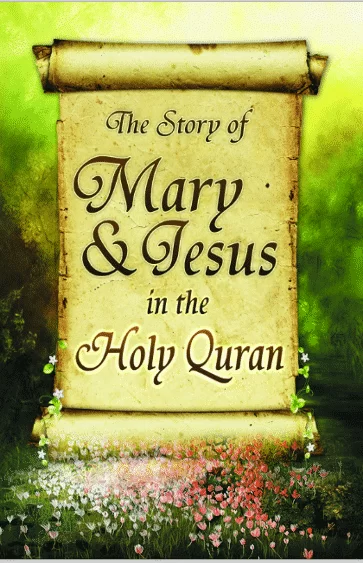
This episode is remembered in Islamic tradition as an early sign of the respect Islam holds for Jesus and Mary, honored by name across many verses of the Quran, a subject explored further in 10 women mentioned in the Quran.
3. The Prophet Muhammad Engaged Christian Communities Directly During His Lifetime
The historical relationship between Islam and Christianity does not begin with armies. It begins with conversation. Scholars researching early Muslim-Christian contact note that Muslim-Christian dialogue traces back to the rise of Islam in the seventh century, with both communities rooted in the monotheism of the patriarch Abraham.
The most documented of these early encounters was the delegation of Christians from Najran, a Christian stronghold in what is now southern Saudi Arabia and Yemen.
The links between the Prophet and the Najranite Christians were established as early as the Meccan period, with roughly twenty Christians reportedly visiting Muhammad in Mecca before the death of his uncle Abu Talib in 619 CE.
The more famous encounter came later. In 10 AH (631 CE), a delegation of approximately sixty Christians, including around fourteen chiefs, traveled to Medina to discuss their theological differences directly with the Prophet.
What happened next reveals something important about how early Islam approached religious difference. The Prophet received the Najran delegation in the shade of his own mosque rather than turning them away or forcing an immediate decision.
The meeting produced a documented treaty — one that later Muslim authorities would invoke as a precedent when defining the legal status of Christian communities under the Caliphate in subsequent centuries.
This was not an isolated gesture. In the decades after Muhammad’s death, Muslims came to rule over large Christian populations across Syria, Egypt, and Iraq, meaning most day-to-day Christian-Muslim encounters were not between soldiers but between neighbors, merchants, scholars, and administrators.
Readers curious about how the Prophet’s outreach extended beyond Arabia can explore how Prophet Muhammad began spreading his message about Islam in more depth.
The Quran Frames Christians as People of Shared Scripture
The Quran’s own language toward Christians reflects this posture of direct engagement rather than dismissal. Surah Al-Imran calls on Christians and Jews to recognize common theological ground:
قُلْ يَا أَهْلَ الْكِتَابِ تَعَالَوْا إِلَىٰ كَلِمَةٍ سَوَاءٍ بَيْنَنَا وَبَيْنَكُمْ أَلَّا نَعْبُدَ إِلَّا اللَّهَ وَلَا نُشْرِكَ بِهِ شَيْئًا وَلَا يَتَّخِذَ بَعْضُنَا بَعْضًا أَرْبَابًا مِنْ دُونِ اللَّهِ
“Say, ‘O People of the Scripture, come to a word that is equitable between us and you — that we will not worship except Allah and not associate anything with Him and not take one another as lords instead of Allah.'”
This verse appears directly inside the Prophet’s later correspondence with Byzantine authorities, discussed below, showing continuity between Quranic address and lived diplomatic practice.
4. The Prophet’s Letter to Emperor Heraclius Opened Formal Islam-Christianity State Relations
Around 628 CE, the Prophet Muhammad sent formal letters to the rulers of neighboring empires inviting them to Islam — among them, Heraclius, the Byzantine Emperor and head of the Christian world’s most powerful state.
This event is preserved in one of the most detailed hadiths in Islamic literature, narrated by Abu Sufyan, who was present at the Byzantine court when the letter arrived.
“In the name of Allah, the Beneficent, the Merciful. From Muhammad, Allah’s slave and His Apostle, to Heraclius, the ruler of Byzantine: Peace be upon him who follows the right path. I invite you to Islam…”
The letter closed by quoting the very verse from Surah Al-Imran cited above — Muhammad appealed to Heraclius on the basis of shared monotheistic belief, not conquest.
Heraclius questioned Abu Sufyan closely about the Prophet’s character and teachings before examining the letter himself, and reportedly acknowledged privately that the description matched the signs of true prophethood he expected.
5. Islamic Rule Governed Christian Communities Through the Dhimma System
As the early Islamic conquests brought Syria, Egypt, Iraq, and North Africa under Muslim political control during the 7th century, Muslim rulers needed a framework for governing the large Christian populations who now lived under their authority. That framework became known as the dhimma.
Historians describe the practical shape of this system plainly: after the rapid expansion of Muslim dominion in the 7th century, Muslim leaders developed the notion of the dhimma, or “protected person” status, which applied to the People of the Book — Christians and Jews.
In exchange for a special tax, known as the jizya, dhimmi communities retained the right to practice their religion, maintain their own courts for internal community matters, and continue their economic and social life largely intact.
The specific terms most often associated with this system come from a document known as the Pact of Umar, traditionally linked to the second Caliph, Umar ibn al-Khattab. Historians note real uncertainty about the document’s precise origin and dating — the Pact of Umar is difficult to date with certainty and may have originated as early as 637 CE, after Muslims conquered Christian Syria and Palestine, though some scholars date the surviving text later.
What is not disputed is its long historical influence: the eighth-century jurist Abu Yusuf noted that the terms in the Pact dealing with dhimmis aligned with the Quran and hadith literature, and the framework it describes shaped Muslim legal treatment of Christian and Jewish communities for over a millennium.
Historians studying the Pact’s long arc note that its influence did not disappear quickly. The Pact of Umar retained its force as an Islamic concept of the proper relationship between Muslims and non-Muslims even after it was incrementally abolished by Ottoman decrees in 1839 and 1856, with Iran following in 1873.
6. Islamic Expansion Across Former Byzantine Territory Brought Millions of Christians Under Muslim Rule
Within roughly two decades of the Prophet’s death in 632 CE, Muslim armies had taken Syria, Palestine, and Egypt from the Byzantine Empire, placing large Christian populations under Islamic governance. Jerusalem fell to Caliph Umar ibn al-Khattab in 638 CE, largely without the destruction that had accompanied earlier conquests of the city.
Christian communities under early Islamic rule generally retained their places of worship, clergy, and internal legal autonomy in exchange for specific obligations, arrangements historically associated with the Pact of Umar.
Classical historians such as al-Tabari, in his monumental Tarikh al-Rusul wa’l-Muluk, recorded these events in detail as they unfolded across the region.
Readers can learn more about how this expansion began in how Prophet Muhammad started spreading his message about Islam.
7. The Crusades Opened Two Centuries of Religious Warfare Between Christian and Muslim Powers
Beginning in 1095, when Pope Urban II called for a military campaign to reclaim Jerusalem, the Crusades launched roughly two hundred years of intermittent religious warfare across the Levant. Jerusalem fell to Crusader forces in 1099, then was retaken by Salah ad-Din (Saladin) in 1187 following the Battle of Hattin.
The Crusades remain, for many people today, the defining image of Muslim-Christian relations, though they represent only one chapter within a much longer and more varied history that includes centuries of coexistence, trade, and scholarly exchange on both sides.
8. Christian Scholars Became Central Figures in Baghdad’s Islamic Golden Age
Perhaps the most underreported chapter in Islam-Christianity history is also one of the most consequential for world civilization: the role Christian scholars played inside the Muslim world’s greatest intellectual institution, the House of Wisdom (Bayt al-Hikmah) in Abbasid Baghdad.
The House of Wisdom was a royal library established and maintained by the Abbasid caliphs in Baghdad, reaching its peak under Caliph Harun al-Rashid and his son al-Ma’mun, who expanded its activities and sponsored the translation of Greek philosophy into Arabic.
This was not a Muslims-only project. Christian, Jewish, and Muslim scholars flocked to Baghdad to translate ancient Greek and Arabic treatises, working side by side inside the same institution.
The single most important figure in this translation movement was a Christian. Hunayn ibn Ishaq (809–873 CE), an East Syriac Christian, mastered Arabic, Persian, Syriac, and Greek, and began his extensive translation career at just seventeen years old, eventually translating more than 260 works and authoring over 100 of his own.
His scholarly output was staggering: Hunayn personally translated more than a hundred scholarly works, including an extensive corpus of Galen’s medical writings, using a rigorous philological method of comparing multiple manuscripts and verifying terminology.
Notably, Hunayn never converted to Islam, and his Christian faith remained central to his identity even while he served as one of the most trusted scholars in the Muslim caliph’s court.
Rejecting the advice of an acquaintance that he convert to Islam, Hunayn instead authored an apology for Christianity, and Caliph al-Ma’mun reportedly paid him the weight of each translated manuscript in gold.
Historians researching this period confirm he was not an isolated case: other Christian scientists of ninth-century Baghdad included the astronomer Yahya ibn abi Mansur and the physicians Jibril ibn Bakhtyashu and Ibn Massawayh, working alongside Jewish scholars such as the astronomer Masha’allah.
This intellectual partnership had consequences far beyond Baghdad. The Greek philosophical and scientific texts preserved and expanded upon by these Muslim-Christian-Jewish teams later flowed into medieval Europe, contributing directly to the Latin translation movements and the eventual European Renaissance.
Explore Islam Welcomes Every Question About Islam and Its View of Everyday Life
Explore Islam exists to answer exactly these kinds of questions, openly and without pressure, for anyone genuinely curious about how Islam and Christianity relate to one another. Whether you are researching for yourself or working through real uncertainty, the Explore Islam researchers welcome the conversation.
Browse more articles and resources on Explore Islam Articles & Resources.
Watch and read more through the Explore Islam platform, including its book and video libraries.
Have a specific question? Reach out directly — all questions welcome.
Summary
Islam and Christianity share a common thread through Abrahamic revelation while disagreeing fundamentally on the nature of Jesus, son of Mary. From the Negus offering refuge in Abyssinia to Christian scholars building the House of Wisdom, their history includes far more cooperation than most accounts acknowledge.
Centuries of conquest and conflict, including the Crusades, sit alongside genuine scholarly partnership and, more recently, formal interfaith dialogue.
Frequently Asked Questions
Do Muslims believe in Jesus Christ?
Yes, Muslims believe in Jesus as one of Allah’s greatest prophets, born of the Virgin Mary and given genuine miracles by Allah’s permission. Islam rejects his divinity and the crucifixion, teaching instead that Allah raised him.
Why did the Crusades happen between Muslims and Christians?
The Crusades began in 1095 after Pope Urban II called for a military campaign to reclaim Jerusalem, launching roughly two centuries of religious warfare across the Levant between Christian and Muslim powers.
Do Islam and Christianity worship the same God?
Both faiths trace their monotheism to the God of Abraham, but Islam firmly rejects the Trinity and the divinity of Jesus, worshipping Allah as absolutely one, with no partners, sons, or equals of any kind.
How did Christians live under early Islamic rule?
Christian communities under early Islamic governance generally kept their churches, clergy, and internal legal affairs, under arrangements historically associated with the Pact of Umar, in exchange for specific obligations defined by Islamic law at the time.