
Have you ever wondered how Islam views the concept of destiny (“Al-Qadar” in Arabic) and whether Islam believes in predestination only, free will only, or some combination of both concepts. No worries. These are very common questions for those who try to understand the concept of destiny in Islam.
In this article, we will discuss the Islamic definition of destiny, and based on that definition, we will see how Islam harmonizes destiny and man’s free will. Then, we will explore what Islam teaches about destiny, how it relates to human actions, and some common misconceptions about this profound belief. Finally, we will examine if there is anything that can change one’s destiny.
Does Islam Believe In Destiny?
Yes, Islam believes in destiny—known as Al-Qadar—as one of the six pillars of faith. Muslims believe that Allah has complete knowledge and control over all things, and that life events—both good and bad—happen by His will. However, Islam also teaches that humans are given free will in areas where they can choose right or wrong, and are accountable for those choices on the Day of Judgment.
While some aspects of life are predestined, like birth or death, people are still expected to strive, make ethical decisions, and trust in Allah. Supplication (du‘aa’) is even taught as a powerful means to alter destiny, showing that human effort and divine will work together. Islam strikes a unique balance between divine decree and human responsibility.
What Is Destiny In Islam?
Deeply rooted in the teachings of the Quran and the Sunnah (traditions of Prophet Muhammad, peace be upon him), destiny is a fundamental belief in Islam. Muslims believe that Allah has complete knowledge and control over all things, and that every event in the universe occurs by His divine will and knowledge. This is the Islamic definition of destiny.
This includes the idea that major life events like birth, death, success, hardship, etc. are all preordained by Allah. But, how can this perception be harmonized with the concept of man’s free will in Islam? And most importantly, how can people be held accountable for their actions if everything is already predetermined? Let’s see below!
How Does Islam Harmonize Destiny And Man’s Free Will?
In Islam, the relationship between destiny and free will is so profound and balanced that it emphasizes both Allah’s ultimate control over all affairs and human responsibility for their own choices in life.
To learn how Islam views free will in light of destiny, you need to know that there are two types of actions/realities/choices in everyone’s life. These are:
1- Things That No One Chooses In Their Lives:
These include things such as their parents, family members, skin color, height, family’s medical history, where someone is born, how and when they will die, actions of others, etc.
2- Things That Everyone Has A Choice About:
Of course, the most important of these is choosing whether to seek the truth and believe in a Creator. They also include things like choosing to behave ethically or unethically.
While there are many things that are forced (or, to use Islamic terminology, predestined) for humans, such as those in the first category, humans are still expected to strive, make ethical decisions upon which they have full control.
So, Islamically, people are held accountable for feeling content/discontent about Allah’s decree or the things that are predestined for them by Allah [points in the first category above] as well as for their own choices and actions in life [things in the second category].
What Does Islam Teach About Destiny?
In light of what we have explained, we will explore below the general teachings of Islam about destiny:
1- Belief In Destiny As One Of The 6 Main Beliefs In Islam:
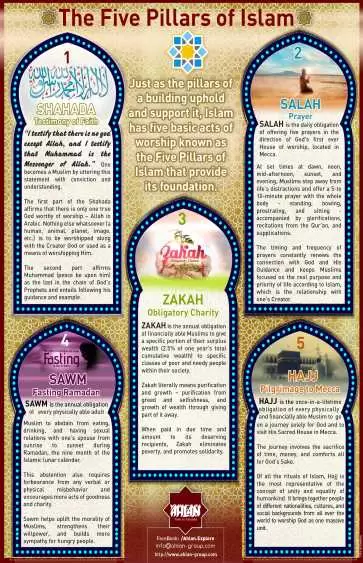
In Islam, there are 6 Pillars of Faith [the Islamic Belief System]. These are outlined in the following narration by Prophet Muhammad (peace be upon him).
It was narrated that a man came to Prophet Muhammad (peace be upon him) and asked him: “O Messenger of Allah, tell me what is faith [or about faith].” He said: “To believe in Allah, His Angels, His Books, His Messengers, the Last Day, and to believe in Al-Qadar (predestination).” – Sufyan said: I think he said: “… both good and bad.”
In this narration, Prophet Muhammad (peace be upon him) is asked about the Pillars of Faith. He replied that they are six. The last one of them is to believe in Al-Qadar [that is predestination], whether good or bad.
2- Allah’s Knowledge Vs. Human Action:
Just because Allah knows what will happen does not mean humans are forced into actions—rather, Allah knows the choices people will make freely. For example, if you decide to travel and choose to travel by train, Allah already knows that, even before you thought about travelling.
This kind of knowledge and allowing the event [here travelling] to happen represent a part of Allah’s predestination, although the person has full control about the event. Now, if the train crashes, then this is another part of Allah’s decree (Qadar) which the person cannot control.
3- Contentment As An Obligation For Muslims:
Contentment is a profound spiritual state where a believer willingly accepts Allah’s decree with peace, especially in times of hardship. It is closely tied to faith, submission, and trust in Allah. Believers find peace knowing that trials and hardships are part of Allah’s wisdom. Thus, they are rewarded/punished for feeling content/discontent about Allah’s decree.
In this regard, Allah says in the Quran:
“Do people think once they say, “We believe,” that they will be left without being put to the test?”
So Allah declares, in this verse, that difficulties and hardships in life are meant to test people’s belief in Allah and His divine wisdom, and the Last Day’s rewards/punishments are based on that belief as well as their actions in life.
4- People Are Rewarded For Their Efforts And Not For The Outcomes:
Islam teaches Muslims to focus on hard work, not outcomes. This is the meaning of Tawkul (trusting Allah). While planning and striving, Muslims believe outcomes are in Allah’s hands. So, after doing whatever is needed, a true Muslim should accept the decree of Allah as being the ultimate wisdom.
In this regard, Allah says in the Quran.
“And put your trust in Allah, for Allah is sufficient as a Trustee of Affairs.”
Common Misconceptions About Destiny in Islam
While so many Muslims understand and accept the concept of destiny, there are still some misconceptions that some of them have about destiny. These include the following:
1- If Everything Is Predestined, Then There Is No Need For Taking Any Action.
Islam instructs Muslims to strive and take practical means to be successful in both worldly and religious matters, and then willingly accept the results and consequences, no matter what they are; as they represent Allah’s absolute wisdom.
In this regard, Prophet Muhammad (peace be upon him) said: “There is no soul among you but his place in Paradise or Hell is known.” They said: “O Messenger of Allah (ﷺ), why should we strive?” He said: “Keep striving for everyone will be helped to do that for which he was created…”
In this hadith, Prophet Muhammad (peace be upon him) confirms that although Allah already knows your fate in the Hereafter, it is your voluntary actions that lead you to Paradise or Hellfire. So he encourages Muslims to strive in the path of Allah.
2- Evil Is Forced Upon People.
While trials and hardships are part of destiny, sinful actions come from human misuse of free will. So no one can say that they are predestined to be evil – rather they choose to be evil.
Allah says in the Quran:
“On that Day people will proceed in separate groups to be shown the consequences of their deeds. So whoever does an atom’s weight of good will see it. And whoever does an atom’s weight of evil will see it.”
3- Sin Is Excused.
Building upon the misconception that evil is forced upon people, some wrongdoers may think they are excused for their sins. However, Islamically, one cannot blame destiny for wrongdoing — rather if they commit sins, they must seek guidance and repent.
Is There Anything That Can Change One’s Destiny?
Yes, there is one thing in Islam that can change one’s destiny: Duʿaa (Supplication).
Prophet Muhammad (peace be upon him) said: ” …Nothing repels the Divine decree except supplication…”
In this narration, Prophet Muhammad (peace be upon him) confirms that the only thing that can change one’s destiny is supplication.
Examples Of The Changing Power Of Supplication In The Quran:
This great power of supplication to change one’s destiny is evident in the Quran by the stories of both Prophets Ibrahim and Zakariya (peace be upon them).
1- Prophet Ibrahim (peace be upon him) was too old and his wife was barren, and he wished a son and made supplication to Allah to give him a son.
In this regard, he says in the Quran:
“All praise is for Allah who has blessed me with Ishmael and Isaac in my old age. My Lord is indeed the Hearer of ˹all˺ prayers.”
2- Prophet Zakariya (peace be upon him) was also too old, and his wife was barren. However, he prayed for a child and was granted Yahya. (The Quran, 19:2-9).
Why Does Allah Make Supplication Capable Of Changing Destiny?
There are several pieces of wisdom behind Allah’s making supplication capable of changing one’s destiny. These include:
1- It is a means to encourage Muslims to ask Allah for anything, even if it seems impossible for them. This is repeatedly depicted in the Quran.
2- This also deepens a Muslim’s belief that Allah is capable of EVERTHING. Nothing in the world is beyond Allah’s omnipotence.
3- This deepens the high status of supplication in Islam as “the brain of worship”.
In this regard, the Prophet Muhammad (peace be upon him) said:
“Verily supplication is worship.”
Conclusion
To sum up, Islam believes in predestination (Al-Qadar) and teaches that destiny and free will coexist: Allah has full knowledge and control over all events, yet humans are responsible for their choices. This belief encourages effort, trust in Allah, and accountability, ensuring Muslims remain active in life while submitting to divine wisdom.
This great balance between divine decree and personal responsibility is a key aspect of Islamic theology. Along with Allah’s wisdom and will, man’s choices in life are what determine whether they will receive rewards or punishments, both in this life and after death.