What makes the Islamic law (Sharia) relevant across centuries, cultures, and civilisations? What role does Sharia play in guiding human life today? The answer lies in the divine balance and wisdom embedded in the rules of Islam (Sharia), which represent a comprehensive framework designed not to burden humanity but to regulate belief, conduct, and social relations, aiming to guide people toward justice, stability, and righteousness.
In this article, we will explore the general rules of Islam, from core principles to practical application, and how Muslims live by Islamic rulings in the modern world. It also addresses an essential question: Can Muslims follow rules other than those prescribed by Islamic law?
1. Submission to the Only One True God is the main rule of Islam
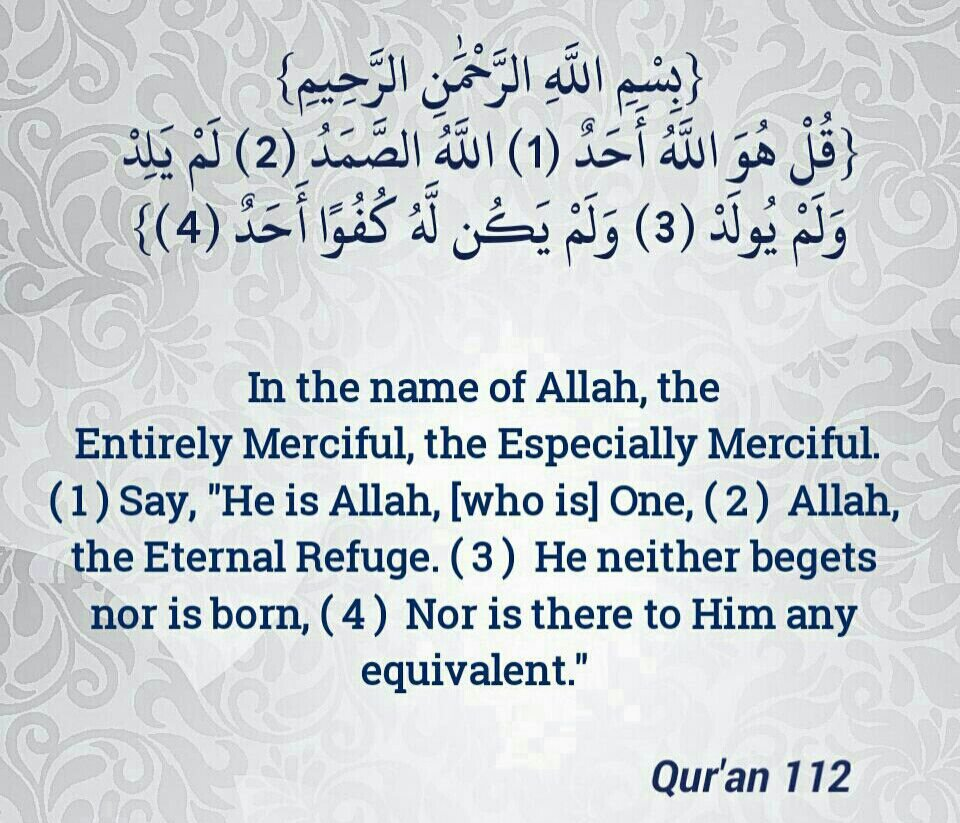
The core principle of Islam is to submit to the One God -Allah, may He be exalted- without associating partners with Him since He is the Almighty Creator who has no equivalent.
“˹He is the˺ Lord of the heavens, and the earth, and everything in between. So worship Him ˹alone˺, and be steadfast in His worship. Do you know of anyone equal to Him ˹in His attributes˺?”
Moreover, submission requires obedience, as Muslims are expected to obey Allah’s commands and refrain from His prohibitions.
Allah has said in the Quran:
“We never sent a messenger before you ˹O Prophet˺ without revealing to him: ‘There is no god ˹worthy of worship˺ except Me, so worship Me ˹alone˺.”
2. Guidance is explicitly highlighted as the main objective of revelation
The message of Islam aims to guide people to the right path, as the Quran was revealed to the Prophet Muhammad (PBUH) as a guiding book for all mankind and to save them from deviating from the one right path.
Allah has said in the Quran:
- “This is the Book! There is no doubt about it—a guide for those mindful ˹of Allah˺,” {Quran 2:2}
- “This is Allah’s guidance with which He guides whoever He wills of His servants.” {Quran 6:88}
- “˹This is˺ a Book which We have revealed to you ˹O Prophet˺ so that you may lead people out of darkness and into light, by the Will of their Lord, to the Path of the Almighty, the Praiseworthy.” {Quran 14:1}
Read more: Have you asked Allah for guidance today?
3. Balance: A pivotal objective in Islam
“Rather, seek the ˹reward˺ of the Hereafter by means of what Allah has granted you, without forgetting your share of this world.”
Balance in Islam is substantial and clearly stated in the Quran, as Islam is not only a ritual religion but also a complete lifestyle. The Islamic rituals reflect on the Muslim’s life and help him live in a guided, balanced way.
4. Justice is entailed in all actions and legislation in Islam
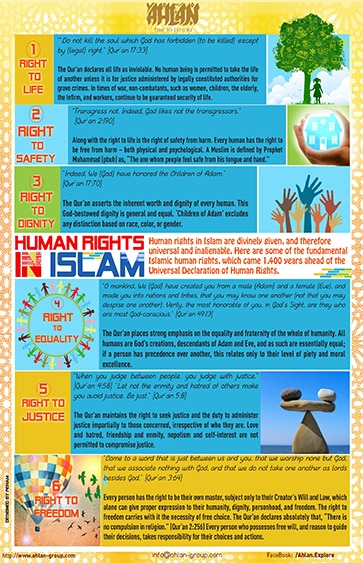
Justice is a foundational principle that governs all actions and legislation in Islam. The Qur’an repeatedly commands believers to uphold fairness without bias, even when it concerns themselves or those they love, emphasizing that justice is a duty owed to God before anyone else.
Even if justice may sometimes appear absent in this temporary life as a test, every soul will meet the just judgment for its actions. Almighty One God highlighted this critical concept of justice in the Quran:
- “We [Almighty One God; plural form for majesty] set up the scales of justice for the Day of Judgment, so no soul will be wronged in the least. And ˹even˺ if a deed is the weight of a mustard seed, We will bring it forth.” (Quran, 21:47)
- “Indeed, Allah commands justice, grace, as well as generosity to close relatives.” (Quran, 16:90)
The Five Pillars of Islam: The core obligations of the Muslim’s life
Islam has five pillars controlling the outer appearance of the Muslim lifestyle with high implications on the inside. Accepting these five pillars is a cornerstone for becoming a Muslim:
1- Shahada (Testimony)
To become a Muslim, the individual should testify that there is no deity worthy of worship but Allah, and Muhammad (PBUH) is the messenger of Allah.
2- Salah (Prayer)
Muslims perform five obligatory prayers a day. The prayer is the connection between the slave and His Lord, Almighty Allah.
3- Zakah (Charity)
It’s a certain portion of income (typically 2.5%) given from the wealthy Muslims to the needy. It’s to purify the heart and wealth of the giver and to foster solidarity in the Muslim societies.
4- Fasting Ramadan
Muslims fast one month a year, the Holy month of Ramadan, from dawn to sunset, a strong tool for true salvation from bad habits and a starting point for new life of purity.
5- Hajj (Pilgrimage)
Muslims go to Mecca to perform Hajj once in a lifetime for those who are physically and financially able to do this pillar. It’s a way of feeling unity with all Muslims in one place for the same Creator, regardless of race, color, or status.
Read more: The 5 Pillars of Islam
The Six Pillars of Iman (Faith)
Islamic belief has six pillars that mainly control the inner beliefs of the Muslim with reflections on his sayings and actions. These six pillars are:
1. Belief in Allah (Oneness)
To believe that Almighty Allah is the one and only Creator, Lord of the universe, Sustainer, and worthy of all worship.
2. Belief in His Angels
To believe in the existence of Angels who obey Allah’s commands without question.
3. Belief in His Books
To believe that Allah revealed the Holy Books to His prophets, the Torah, the Gospel, the Psalms, and the Quran.
4. Belief in His Prophets
To believe that all prophets sent by Allah to guide humanity, and Muhammad is the final prophet.
5. Belief in the Day of Judgement
To believe in the Last Day, when all people will be resurrected and held accountable for all their actions.
6. Belief in the Divine Decree (Qadar)
To believe that all events, good or bad, happen according to Allah’s knowledge, wisdom, and plan.
To know more, read: The Top 6 Major Beliefs Of Islam with Main Practices
The five main necessities of Sharia
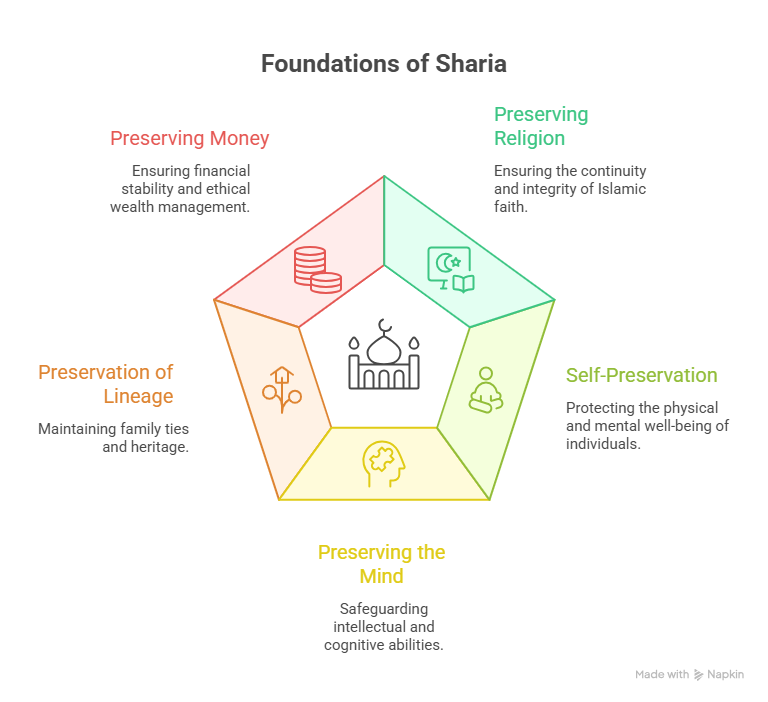
Islamic law is built upon essential objectives that safeguard human well-being and ensure a just, stable society. At the heart of these objectives are five fundamental necessities: preserving religion, protecting life, safeguarding the mind, preserving lineage, and protecting money.
First: preserving the religion
Islam highlights the importance of religion in human life. That appears distinctly by guiding the soul to worship God, framing morals and ethics, strengthening virtues, and providing inner peace and true happiness in the Muslim’s life.
- “Whoever does good, whether male or female, and is a believer, We will surely bless them with a good life,” {Quran 16:97}
- “We send down the Quran as a healing and mercy for the believers,” {Quran 17:82}
Second: Self-preservation
Protecting one’s right to live is essential in Islam and one of the fundamental necessities. Thereby, strict punishments have been imposed in Islam to protect people’s lives.
Third: Preserving the mind
In Islam, the intellect has a central value, as it forms the basis of moral responsibility, distinguishes humankind from other creatures and makes them honoured, and qualifies individuals to carry the divine trust to act as God’s stewards on Earth.
- Almighty Allah says: “Indeed, We offered the trust to the heavens and the earth and the mountains, but they ˹all˺ declined to bear it, being fearful of it. But humanity assumed it,” {Quran 33:72}
Fourth: Preservation of lineage
Islam seeks the continuation of the human journey on Earth until Allah, may He be exalted, permits the end of the world. Hence, it is a major priority to preserve the human race by encouraging procreation and framing relationships between men and women.
Fifth: Preserving the money
Islam acknowledges the innate human desire toward ownership, so Sharia permits lawful wealth, yet legislated systems and measures are in place to address the harmful effects that may result from the tyranny of this tendency. It refines it with guidance and balance, and regulates it through systems such as zakat (charity), inheritance, and social welfare, to ensure justice and social balance, thereby recognizing wealth as an essential aspect of human life.
How can Muslims follow Islamic rules in modern life?
To begin with, sending the final Prophet Muhammad (PBUH) with Sharia is one of God’s blessings, as he was sent as mercy to the world. Allah says:
“We have sent you ˹O Prophet˺ only as a mercy for the whole world.”
Furthermore, Allah has made His law perfect and complete. Allah has said in the Quran:
“Today I have perfected your faith for you, completed My favour upon you, and chosen Islam as your way.”
Additionally, Islam is a universal religion that is applicable anytime and anywhere since the Prophet Muhammad (PBUH) was sent to all people:
“ Say, ˹O Prophet,˺ “O humanity! I am Allah’s Messenger to you all.”
Helpful means to follow Islamic rules
- Following the footsteps of the Prophet Muhammad (PBUH), the Muslim can enjoy his life while refraining from prohibitions. Almighty Allah says: “He commands them to do good and forbids them from evil, permits for them what is lawful and forbids to them what is impure, and relieves them from their burdens and the shackles that bound them.” {Quran 7:157}
- Islam encourages balance in striving in life and in the Hereafter, as it praises those who supplicate for both of them: “Yet there are others who say, ‘Our Lord! Grant us the good of this world and the Hereafter, and protect us from the torment of the Fire.” {Quran 2:201}
- Believing in the Most Wise, Allah, being sufficient and satisfied with Sharia, and feeling proud of being a Muslim shapes a remarkable character in the Muslim that enables him to succeed in life.
Read more: Do Muslims believe Islam needs to return to the fundamental teachings of Muhammad (PBUH)?
Can Muslims follow other rules?
Islam establishes that authority in judgment and legislation belongs only to Almighy Allah, as He alone has the authority in command and obedience. Almighty Allah says:
“The creation and the command belong to Him ˹alone˺.”
Hence, following Allah’s rules and applying them is an inseparable part of faith, just as affirming Allah’s oneness in creation and worship.
It is stated clearly in the Quran that true belief is not realized until disputes are referred to the Prophet Muhammad (PBUH):
“But no! By your Lord, they will never be ˹true˺ believers until they accept you ˹O Prophet˺ as the judge in their disputes, and find no resistance within themselves against your decision and submit wholeheartedly.”
And finally, any system other than the divine revelation represents ṭāghūt (false judge) and contradicts tawḥīd (oneness), while adherence to Allah’s guidance leads to righteousness, stability, and success in this life and the Hereafter.
Read more:
Conclusion
To conclude, the rules of Islam (Sharia) form a complete and coherent system that offers clear guidance for Muslims at all times and places. We have represented in this article:
- The general rules of Islam- balance, justice, and guidance provide a moral framework that remains applicable in modern life and enables Muslims to apply divine guidance in their daily lives.
- The five main necessities to preserve in Islam: The objective of Sharia that highlights the divine wisdom in safeguarding religion, life, intellect, lineage, and property.
- The five pillars of Islam & the six pillars of faith: The gateway to becoming a Muslim and the core beliefs that control all the rules of Islam.
Consequently, Muslims are called to uphold and prioritise the source of guidance, recognizing that true faith lies in submission to Allah and His messenger (PBUH) commands.
Learn more about Sharia through chatting with our team. Send a WhatsApp message right now for a deeper, fruitful conversation about your concerns about Islam!