
Islam inheritance rules are among the clearest examples of the wisdom, justice, and precision of Islamic law. Rather than being isolated financial rulings, they are part of a comprehensive system legislated by God Almighty to protect families, preserve wealth, and establish fairness within society.
You may have heard many misconceptions about Islam inheritance rules—that they are outdated, unfair, or even contain mistakes that lead to injustice. However, a closer look at the Quran and the Sunnah reveals the exact opposite.
In this article, you will discover the wisdom behind these rulings, the principles they are built upon, and why they continue to demonstrate the justice and brilliance of Islam. If you want to understand how Islam benefits both individuals and society, the Islamic law of inheritance is one of the best places to start.
summary:
Islamic inheritance rules (Fara’id) are a divinely ordained, mathematically precise system derived from the Quran, Sunnah, scholarly consensus, and analogical reasoning. The system follows a step-by-step algorithm — settling debts and burial costs first, then distributing shares among four categories of heirs: primary heirs, quota-heirs, residuaries, and extended relatives. Islam granted women inheritance rights centuries before modern legal systems did. Built-in safeguards protect orphans and vulnerable heirs from abuse. The complexity of these rules directly catalyzed the development of algebra by Al-Khwarizmi. Claims of mathematical errors or unfairness stem from misrepresentation, not the rules themselves, which remain valid and applicable across all times and places.

1. Inheritance Rules in Islam are based on the four sources of Shariah: Quran, Sunnah, Consensus, and Qiyas
The branch of Islamic scholarship that studies the cases of inheritance in Islam is called (Ilm al fara’id). Fara’id comes from the word (Farad) that means obligation or right given by God. In this specific case it refers to how dividing inheritance should be.
Inheritance rules in Islam come from the Noble Quran, the prophetic tradition (Sunnah), general consensus of Muslims and their application (Ijma’), as well as Qiyas reasoning; which are the general sources of Islamic rulings generally.
2. Inheritance is divided based on a step by step algorithm
The first step to consider in inheritance division in islam is always: pay burial expenses, and settle any debts.
Then fulfilling the will of the testator, which has many limitations: capped at a third of the total inheritance and nullified if it includes legal heirs (unless the others agreed with the will).
After that roles and priorities are set depending on each case then each share is assigned as per stated percentages in the law.
3. Types of heirs in Islam for distribution of wealth
Scholars of Fara’id Divide heirs into 3 categories:
Those who are inherit by Qouta (فرائض)
Those who inherit by Residue (عصبة)
Those who inherit by both
The scholars go in depth on what each of those include and their specific cases and so on. but for simplicity we will not go into all these details. I gathered all different types of heirs and rearranged it for simplicity and understanding even if it overlaps for one person in some cases.
We can divide the heir types into 5:
A. Primary heirs:
They are part of the Quota-Heirs. They are never totally excluded by the presence of any other heir. They Include (Spouse, parents, sons & daughters) who are always entitled to a portion of inheritance.
They are only excluded by one of three causes:
· Having Different Religion (As being a Non Muslim while the deceased a Muslim or vice versa)
· Not alive when the deceased died. Only living legal heirs are entitled to inheritance.
· Intentional killing of the deceased disqualifies the killer from inheritance.
B. Quota-heirs (ذوو الفرائض):
Those with clear set quotas that they are entitled to. and to them the name (Fara’d) is made.
There are two types of Shares:
Set shares: where a set percentage is stated for a person.
Sharing the remaining: after distributing the percentage shares, the Remainder is then distributed between the entitled heirs to it, taking into account their number to set their shares.
C. Residuaries (ذوو العصبة):
Known group of close relatives. Those who (inherit the rest) after the shares are distributed. They take priority over the next group even if only one of them is present.
D. Extended relatives (ذوو الأرحام):
Those who aren’t named and aren’t part of the (Residuaries). They inherit in the case that no one from the above is alive.
E. (Bayt Al-Mal)
If there are no living heirs at all then the inheritance goes to the state as part of the treasury (Bayt Al-Mal).
4. Islam honors women by right of inheritance
Inheritance rulings in Islam gave women so many rights that, even today, are unmatched.
Before Islam, Women were not included in inheritance at all. They themselves were often considered as part of the inheritance. In some cultures, they would even be burned or buried with the dead!
And by today’s secular standards the right of inheritance is based entirely on the will of the owner. Neither related women nor men have any right to it. If the person decides to give his fortune to cats and nothing to his father and mother, wife and daughters, brothers, and sisters that would be totally okay by modern standards.
Islam gave inheritance rights to mothers, wives, sisters, daughters, while also stopping all of ignorance practices.
Read more:
5. How does Islam prevent abusing its Laws of inheritance?
Many of the claims about (outdated), (unfair), or (not fit) rules of inheritance are based on cases of abuse.
They conflate abusing the rulings with the rulings themselves. Even though Islam set Safeguards against abusing the rules.
As a final point, let’s see how Islam deals with cases of abuse and resolve it.
Protecting the orphan’s wealth is a core Islamic teaching:
There is great emphasis on protecting Orphens and their wealth.
Allah says in the Quran:
“And do not approach the orphan’s property except in a way that is best”
Eating the money of the orphan is a major sin.
Abusing a weak boy or girl, and taking their inheritance is promised severe punishment by the most powerful and Just God almighty.
Maintaining kinship ties makes abuse unlikely
Kinship ties are more important than money or wealth. Cutting these ties is also considered a major sin.
Allah said (In hadith): “I will keep good relation with the one who will keep good relation with you, (womb i.e. Kith and Kin) and sever the relation with the one who severs the relation with you, (womb, i.e. Kith and Kin).”
One of the many wisdoms that God almighty made the inheritance among relatives so that their relationship gets stronger. Going against that is a major sin of its own
Guardianship is honor and responsibility not abusive authority for inheritance
Guardianship is a test from God almighty to see the piety of the guardian.
When God gives you power over someone, especially close kin, do you do what’s right or do you abuse your power and forget the one above you?
An uncle who inherits with his nieces is expected to be their guardian and supporter, not their enemy. If there is a bad relation between family, this is a chance to work it out for the sake of God almighty, so that His blessings are on everyone.
Islamic courts are the final defense against all injustice in wealth distribution
And even before the next life, in this life Islamic courts can deal with abuse cases that happened in inheritance related matters out of guardianship and punish the wrong doer according to the case.
Divine punishment should be in front of all Muslims in all their dealings. Don’t trespass, don’t abuse, don’t try to trick or bypass God.
Read more on The beauty of Islam
6. History Of Islamic Inheritance Rules
Reflection on history of inheritance rules helps for better understanding for this unique Islamic science.
How Islamic inheritance rules was the cause to develop Algebra
Due to the complex nature of Islamic Inheritance Rules and the abundance of cases related to it. There was a real demand for a solution to make the calculations easier. That’s when (Al-Jabr) was developed where (Algebra) comes from.
Algebra was developed for the purpose of calculating Islamic inheritance by the Mathematic scholar (Al-Khwarizmi). The same man Algorithms are named after.
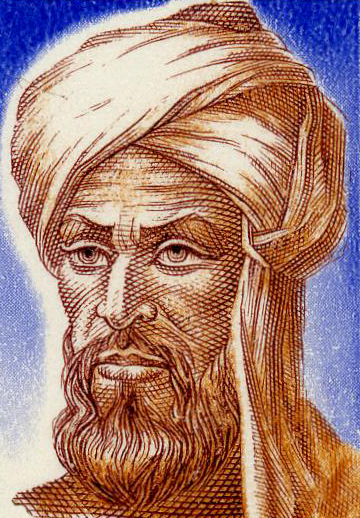
Muhammad ibn Musa al-Khwarizmi (780-850 CE) lived in Baghdad and worked in (Bayt Al-Hikmah) which was supervised by the Caliph himself. Bayt Al-Hikmah was a revolutionary scholarly hub that gathered all fields of knowledge, and helped translate and accelerate the development of key concepts and ideas. His book (Kitab Al-Jabr) introduced systematic methods for solving linear and quadratic equations.
Algebra and algorithms are connected on a foundational level. He wrote another book on Algorithms, which derived its name from him: (Al-Khawarizmi).
And at the root of it all was Islamic Inheritance Rules that set the first precedent and provided the catalyst for the development of those great fields.
Read more on 11 Muslim Scientists who Changed The World
Non-Muslims use Islamic inheritance rulings throughout history
Another great historical fact about Islamic Inheritance Rulings is that (Non-Muslims appeal to it). worked for a very long time in a very broad geography that even non-Muslims would go to courts to divide their inheritance according to it.
Egypt is a typical example of this. Even though minority groups in Islamic states can have certain autonomy in their personal and familial affairs, use their own rulings, morals and so on. Due to the absence of inheritance rulings as detailed and precise as Islam inheritance rulings: non-Muslims would resolve their disputes and settle their own inheritance cases by Islamic rulings.
read more on history of minorities among Muslims
7. Is There a Calculation Error in Islamic Inheritance Rules?
No, there is no error in calculating inheritance in Islam. The error is only in misunderstanding and misrepresenting them.
This is one of the silliest and most ignorant claims circulating in our times.
A common pattern in misconceptions about Islam is abusing ignorance.
It abuses the general lack of Islamic knowledge in the west and absence of proper representation to present a distorted image about Islam
Just from what we learned alone; anyone can see how such claim of error is ridiculous:
· These rulings were at the heart of developing major mathematical branch
· These rulings have been applied on millions of cases for 14 centuries with no issues.
· The cases mentioned have clear and simple solutions within the system.
Thus, this mistake is only a mistake in understanding.
The answer simply:
If percentages are less than 100 or more than 100, percentages turn into (shares) where the person’s percentage is turned into an equivalent share from the total divisible shares. The Quran never speaks about any specific case or says that shares must add up to one. So, compared to how when shares are less than complete one it gets rounded, so when it is more it gets rounded.
This is not a math mistake, it is a mathematical tool and a part of the algorithm.
Here is a detailed scholarly answer from (Islam Q&A)
Masking misrepresentation and misinterpretation of Islam as (Criticism) is a popular trend that needs to stop.
Here are six examples of (Misrepresentations) masked as “Errors” in the Quran
For any decent person such dishonesty should be shameful.

8. Are Rules Of Inheritance In Islam Outdated?
No. Rules of inheritance in Islam have been brilliantly crafted to fit all times and places.
These rules aren’t built on any cultural or temporal assumptions, but rather they are built to work in an (Islamic society) that all other Islamic laws integrate in building.
Nothing new in modern times, different life styles between cultures, or different practices from Arabian culture has any bearing on the rules of inheritance.
Islamic rulings are for an Islamic society
Islamic rulings in general build a picture of society where there are certain roles and responsibilities for different genders, tight family ties, the old taking care of the young and the young respecting the old, and many other values that Islamic law is based on.
These fundamental values aren’t affected by material superficial changes. That’s why such society is possible at any place and any time.
Rules of inheritance in Islam provide a brilliant system to not only distribute inheritance, but also facilitate the Islamic values in the society.
read more on Rights And Duties In Islam
9. Are Inheritance Rules In Islam Fair?
Yes, Inheritance rules in Islam are fair. This is the answer of anyone who looks at the full picture.
Inheritance rules in Islam distribute the property with the aim of helping with social roles in Islamic society and empowering such roles. It is more than just money.
All property are ultimately (the property of God almighty) including our own selves. He provides us in this life with whatever we own, and He distributes it after our death as He sees fit.
No one has any right to inheritance except that which Allah (The owner) gives him. So, claiming (unfairness) is actually what’s unfair.
God has the right to set inheritance rules as He Wills
What makes (Muslims) Muslims, is the very concept of (Islam): to recognize the authority of God almighty, submit to it, and obey it.
If Allah ordered to burn all wealth at death, no one has a right to object.
If He ordered it to be all given to one person, no one would have any right to object.
If He gave the right to distribute it to the dying person no one has a right to object.
If He limits the will to only the third no one has a right to object.
If Allah says women should get tenfold more than men, no one has a right to object.
If Allah says that a man gets twice that of a woman no one has a right to object.
If Allah sets shares to some people and not the others no one has a right to object.
Allah is (Al-‘adl: The Just), He would never be unfair.
Allah questions such a mentality in the Quran:
“Is there disease in their hearts? Or have they doubted? Or do they fear that Allāh will be unjust to them, or His Messenger?”
Learn more about God to know why to obey Him

10. Obeying Islamic rules is the final test for the deceased

Obeying the rulings of inheritance isn’t only a test for the heirs, but also a last test for the deceased.
A Muslim has to accept the fact that his wealth isn’t his own. It was given to him by his Creator. After death, none of it will accompany you, and you will stand alone to be judged by that Creator.
So, trying to find (Loopholes) to go around the laws set by the Creator is detrimental to both the deceased and those who remain.
That would be one of the worst endings for the Deceased. And he would never have another chance to make it right. And what was left behind to the heirs, without the blessings of God almighty can be cursed and bring ruin on them.
Allah says:
“Neither your relatives nor children will benefit you on Judgment Day—He will decide between you. For Allah is All-Seeing of what you do.”
Read more on Salvation in Islam
Learn more about Islamic rules of inheritance and other rules with Explore Islam!
If this topic has raised more questions in your mind, that is a good sign. Real learning begins with honest inquiry.
Explore Islam is a non-profit da’wah platform built precisely for seekers like you — people who want clear, honest, evidence-grounded answers to their questions about Islam.
Chat with us If you have questions about Islam and get your answers. Plan For Your Next Life Today!
Conclusion:
To conclude, Islamic inheritance rules (Fara’id) represent a complete, divinely designed system that is mathematically precise, socially balanced, and spiritually grounded.
Rooted in the Quran and Sunnah, the system protects every heir — including women and orphans — assigns wealth with justice, and has functioned flawlessly across fourteen centuries and millions of cases.
Far from being outdated or flawed, Fara’id directly inspired the development of algebra and continues to serve Muslim communities worldwide. Understanding Islamic inheritance rules in full context reveals not a system of inequality, but one of profound divine wisdom.
Frequently Asked Questions
1. What are Islamic inheritance rules (Fara’id) ?
Inheritance rules in Islam are a set of divinely ordained laws that determine how a deceased person’s estate is distributed among eligible heirs. These rules are primarily derived from the Quran and Sunnah and assign specific shares to certain relatives while establishing priorities for the distribution of wealth.
2. What is the first step in dividing inheritance in Islam?
Before distributing inheritance, burial expenses must be paid, outstanding debts settled, and any valid will executed. Only after these obligations are fulfilled is the remaining estate divided among the legal heirs according to Islamic inheritance law.
3. Who can inherit under Islamic inheritance law?
The primary heirs in Islam include the spouse, parents, sons, and daughters. Depending on the circumstances, other relatives such as siblings, grandparents, and extended family members may also inherit. Eligibility can be affected by factors such as religion, survival at the time of death, and involvement in intentionally causing the deceased’s death.
4. Why do some men receive a larger share than women in Islamic inheritance?
In certain inheritance cases, a male heir receives a share equal to that of two female heirs. This is linked to the financial responsibilities assigned to men in Islam, such as providing for wives, children, and dependent relatives. However, Islamic inheritance contains many scenarios in which women inherit equal to or more than men.
5. Can a Muslim Write a Will?
Yes, a Muslim can write a will (Wasiyyah), but Islamic law imposes clear limitations on it. A will is capped at one-third of the total estate and cannot be used to alter or override the fixed shares of legal heirs. Any bequest exceeding one-third, or one that favors an existing legal heir, is only valid if all other heirs consent. The remaining two-thirds must be distributed according to Fara’id rules.
6. Does Islam Allow Non-Muslims to Inherit from a Muslim?
No. A difference in religion is one of the three conditions that disqualifies an heir from inheriting under Islamic law. A non-Muslim cannot inherit from a Muslim, and a Muslim cannot inherit from a non-Muslim, according to the majority scholarly opinion derived from prophetic tradition. This rule applies regardless of the closeness of the family relationship, including spouses, parents, and children of different faiths.
7. Can a Muslim leave all of their wealth to anyone they choose?
No. Islam allows a person to make a will, but it is generally limited to one-third of the estate and cannot be used to alter the fixed shares of legal heirs unless all affected heirs agree. The remaining estate must be distributed according to Islamic inheritance rules.
8. Are inheritance rules in Islam fair?
Islamic inheritance rules are designed to balance rights, responsibilities, and family obligations within an Islamic social framework. The system considers factors such as financial duties, kinship ties, and social welfare rather than focusing solely on numerical equality between heirs.
9. What happens if a Muslim dies without any heirs?
If a deceased person leaves no eligible heirs, the inheritance is transferred to the public treasury (Bayt al-Mal) according to traditional Islamic legal principles, where it can be used for the benefit of the wider community.
10. Did Islamic inheritance laws contribute to the development of mathematics?
Yes. The complexity of inheritance calculations encouraged the development of advanced mathematical methods. The famous scholar Muhammad ibn Musa al-Khwarizmi developed algebraic techniques that helped solve inheritance-related calculations, contributing to the birth of modern algebra.
11. Is there a calculation error in Islamic inheritance rules?
No. Claims of mathematical errors arise from misunderstandings of how Islamic inheritance law operates. Islamic inheritance has been studied, applied, and refined by scholars for over fourteen centuries, with established methods for resolving complex inheritance scenarios.
12. Are Islamic inheritance rules still relevant today?
Yes. Islamic inheritance laws are based on principles that are not tied to a specific culture, era, or geographic region. Muslims around the world continue to apply these rules as part of the broader Islamic legal framework governing family, property, and social responsibilities.