
When I first came across the concept of speaking in tongues, I assumed it was merely a linguistic matter. But curiosity led me to dig deeper into its meaning in Christianity and explore the personal experiences shared by its advocates. As a Muslim, this journey helped me arrive at a clear answer to the question: Does Islam believe in speaking in tongues? I’m glad to share my reflections and conclusions with you, dear reader.
In this article, we’ll explore what the belief in speaking in tongues means from a biblical perspective, raise a few thoughtful questions around its interpretation, and then present how Islam approaches the idea of spiritual connection. You’ll also discover how Islamic worship offers a path to spiritual elevation that is clear, purposeful, and rooted in understanding.
Let’s dive in together.
What Is the Belief of Speaking in Tongues?
Speaking in tongues, or glossolalia, is the practice of uttering sounds that are unknown to the speaker, often believed to be inspired by a divine spirit. Many followers view it as a way to connect spiritually with God through these mysterious utterances. While commonly observed in Pentecostal and Charismatic churches today, similar practices have appeared in various cultures and religions throughout history—indicating that it is not uniquely Christian. There are two main interpretations for speaking in tongues in Christianity:
1. Speaking in Known Human Languages
Some Christians believe that speaking in tongues refers to the miraculous ability to speak real human languages that the speaker has never learned. This interpretation is based on the biblical account of the Day of Pentecost, as described in Acts 2:1–4 (NKJV):
“And suddenly there came a sound from heaven, as of a rushing mighty wind, and it filled the whole house where they were sitting. Then there appeared to them divided tongues, as of fire, and one sat upon each of them. And they were all filled with the Holy Spirit and began to speak with other tongues, as the Spirit gave them utterance.”
According to this view, the gift of tongues was a divine tool for spreading the message to the unbelievers of various nations, as supported also by
(Mark 16:17):
“And these signs will accompany those who believe: In My name they will cast out demons; they will speak in new tongues.”
However, it raises an important question: Are there any historically confirmed examples of churchmen miraculously speaking new languages to communicate the Gospel without prior learning? Are there written early gospels found in these languages proving the theory? Without such evidence, the claim remains difficult to assess from a historical or rational standpoint.
2. Speaking in Unidentifiable or “Heavenly” Language
Other Christians interpret speaking in tongues as an ongoing spiritual experience involving unknown or non-human sounds. This view is often based on
“For anyone who speaks in a tongue does not speak to people but to God. Indeed, no one understands them; they utter mysteries by the Spirit.”
Here, the practice is considered a private form of communication with God that doesn’t require human understanding. While this interpretation emphasizes personal spirituality, it also prompts reflection: How can one assess the authenticity or effectiveness of a spiritual experience that lacks any objective or verifiable form? If no one, including the speaker, understands the utterance, measuring its spiritual value becomes challenging.
Thus, while many Pentecostal churches encourage their members to speak in tongues as a means of spiritual elevation and connection to God—considering it a sign of being filled with the Holy Spirit and acceptance of Jesus—the practice remains subjective, raising many questions about its authenticity and actual spiritual benefit.
Read more:
Does Islam Believe in Speaking in Tongues?
No, Islam rejects the belief in speaking in tongues and offers an objective and measurable approach to spiritual elevation, manifested in Islamic acts of worship and traditions. Islam also permits learning new languages for spreading the ultimate truth or for any legitimate worldly reason, viewing it purely as a rational and learned skill.
Active Presence Is a Condition for Strong Spiritual Connection in Islam
A Muslim is encouraged to maintain an active heart and mind during acts of worship to gain their full spiritual benefits.
- Condition of Effective Supplication: Regardless of the language used in supplication, Prophet Muhammad (PBUH) emphasized the necessity of an active heart in connection to God during prayer. He said:
“Almighty God does not respond to a supplication from the heart of one heedless.”
[At-Tirmidhi & Ahmad: Hasan Hadith] - Prayer’s Reward Depends on Understanding and Presence: In Islam, the effect and reward of prayer are governed by the level of understanding of the rituals and the presence of the heart during them. For example, when Prophet Muhammad (PBUH) was asked about looking around during prayer, he replied:
“It is a way of stealing by which the devil steals a portion of a slave’s prayer,”
i.e., it affects the prayer’s reward. - Understanding and Reflection Are Key Objectives of Revelation: Almighty God states that one of the main purposes of revealing the Quran is reflection and benefiting from its messages:
“˹This is˺ a blessed Book which We have revealed to you ˹O Prophet˺ so that they may contemplate its verses, and people of reason may be mindful.”
[Quran 38:29] - Condemning Quran Recitation Without Understanding: Almighty God condemns the practice of reciting scripture without understanding, as it contradicts the core purpose of guidance. Regarding a group from the People of the Book, the Quran says:
“And among them are the illiterate who know nothing about the Scripture except lies, and ˹so˺ they ˹wishfully˺ speculate.”
[Quran 2:78]
Thus, Islamic rituals are based on understanding and active presence of the heart, aiming to achieve the spiritual fruits of elevating the soul and improving life.
Read more:
Learning New Languages Is an Accepted Practice in Islam
Almighty God states in the Quran that the diversity of languages is one of His signs:
“And one of His signs is the creation of the heavens and the earth, and the diversity of your languages and colours. Surely in this are signs for those of ˹sound˺ knowledge.”
Therefore, Islam encourages learning new languages using rational methods for worldly or religious purposes.
Conclusion
To conclude, the answer to the question “Does Islam believe in speaking in tongues?” is clear: Islam does not accept the concept of speaking in tongues as believed by some Christians—a practice involving uttering unknown sounds claimed to be a spiritual gift of the Holy Spirit. Islam views such experiences as a subjective and unverifiable state promoted by the devil to misguide people and deceive them.
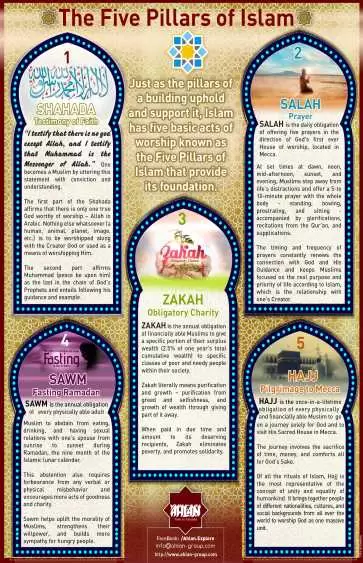
Instead, Islam promotes an objective and understandable approach to spiritual elevation. This is achieved through deliberate rituals rooted in knowledge, understanding, and the active presence of heart and mind. These acts of worship carry deep spiritual meaning and are legislated by the All-Knowing God to nourish the soul and guide human life with clarity.
Curious to learn more about Islam and its unique system of worship based on meaningful, understandable practices that lead to true peace and ultimate happiness? Start a conversation with our team now!